


What's Happening?
Over 500 participants from Africa and beyond convened virtually for the Regional Webinar on Underwater Cultural Heritage (UCH) in the Gulf of Guinea. The event, organized by the University of Ghana, UNESCO, and other partners, highlighted the region's
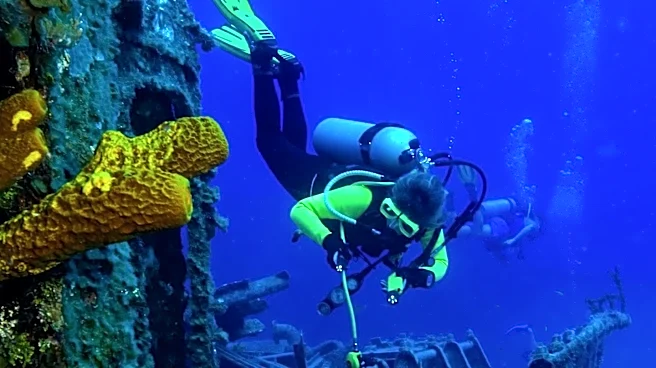
submerged cultural heritage as vital for sustainable development, scientific research, cultural identity, and international cooperation. Speakers emphasized that UCH, including ancient settlements, ports, trade routes, and shipwrecks, offers invaluable evidence of Africa's maritime history and shared cultural legacy. Edmond Moukala, UNESCO Representative to Ghana, stressed that UCH is a repository of human memory that deepens understanding of civilizations and contributes to sustainable development, scientific research, education, and intercultural dialogue. The webinar also focused on implementing the UNESCO 2001 Convention on the Protection of the Underwater Cultural Heritage, promoting in situ preservation, international cooperation, and strengthening national legal frameworks to combat looting. A significant theme was the connection between UCH and ongoing discussions on reparatory justice, particularly concerning sites related to the transatlantic trade in enslaved Africans.
Why It's Important?
The regional webinar on Underwater Cultural Heritage in the Gulf of Guinea holds significant importance, extending beyond the immediate geographical scope to global implications, including for the U.S. The recognition of UCH as a vital asset for sustainable development, scientific research, and cultural identity underscores its multifaceted value. For the U.S., which has its own extensive maritime history and underwater archaeological sites, the discussions on best practices for preservation, combating illicit exploitation, and integrating heritage into coastal management offer valuable lessons. The emphasis on the UNESCO 2001 Convention highlights the need for robust international legal frameworks to protect shared heritage. Furthermore, the webinar's focus on reparatory justice, particularly concerning sites linked to the transatlantic slave trade, resonates deeply with ongoing conversations in the U.S. about historical injustices and their contemporary impacts. Protecting and interpreting these submerged sites can contribute to truth-telling, remembrance, and reconciliation, fostering a more comprehensive understanding of history. Failure to protect UCH risks losing invaluable historical data and cultural narratives, impacting future generations' understanding of global interconnectedness and past human experiences.
What's Next?
The webinar concluded with several agreed-upon priority next steps. These include strengthening regional cooperation among Gulf of Guinea countries on UCH research and protection, supporting wider implementation of the UNESCO 2001 Convention, and expanding capacity-building for maritime archaeology and underwater heritage management. Efforts will also focus on integrating UCH into national coastal management and blue economy policies, promoting collaborative research, digital documentation, and public awareness initiatives. Increased engagement from universities, coastal communities, and young professionals in UCH conservation is also a key objective. Scholarly collaboration, including the development of a peer-reviewed publication, is planned to capture the knowledge shared during the webinar. Crucially, regional dialogue on UCH will continue as an important dimension of memory, restitution, and broader discussions on reparatory justice. The commitment among partners is to translate this dialogue into concrete action, aiming to build a regional community of practice dedicated to protecting the Gulf of Guinea's submerged cultural heritage for present and future generations.
Beyond the Headlines
The discussions at the Regional Webinar on Underwater Cultural Heritage in the Gulf of Guinea delve into profound ethical and cultural dimensions. The recognition of UCH as a 'repository of human memory' elevates its status beyond mere archaeological artifacts to a crucial element of collective identity and historical understanding. The explicit link between UCH and reparatory justice, particularly concerning sites related to the transatlantic slave trade, highlights the ongoing legacy of historical trauma and the role of heritage in addressing it. This perspective suggests that the preservation and interpretation of these sites are not just about historical accuracy but also about acknowledging past wrongs and fostering reconciliation. It challenges societies to confront uncomfortable truths and to use heritage as a tool for healing and social justice. Furthermore, integrating UCH into sustainable development and blue economy strategies underscores a shift towards a more holistic view of heritage, where cultural preservation is seen as intertwined with economic and environmental well-being. This approach can foster a deeper appreciation for the interconnectedness of human history, culture, and the natural world, promoting a more responsible stewardship of our shared global heritage.