

What's Happening?
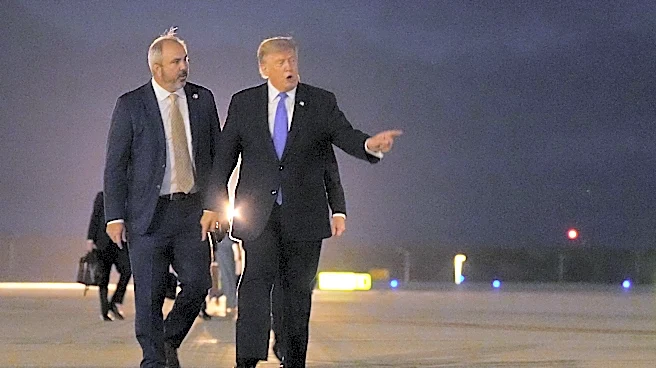
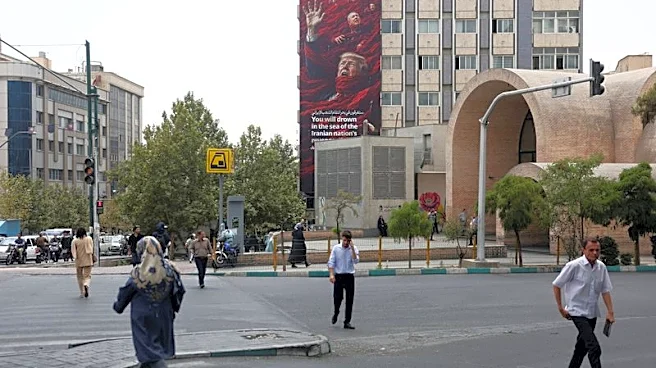
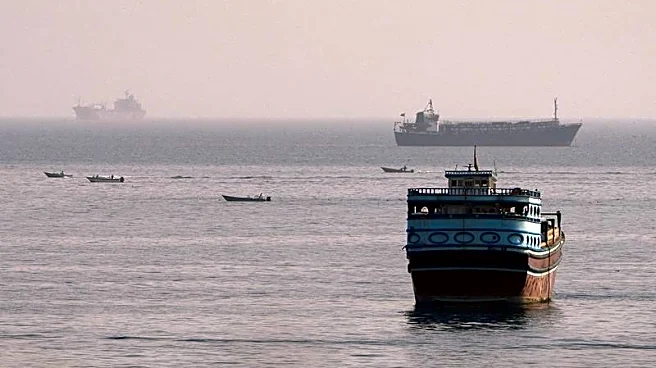
President Trump has issued a warning to Iran regarding the blockade of the Strait of Hormuz, a critical waterway for global oil and gas supplies. Trump stated that a deal to reopen the strait could be reached soon, but warned that Iran would face severe
consequences if negotiations fail. The strait has been a point of contention, with Iran seeking to control it and impose tolls. The situation has led to renewed tensions and military confrontations. The U.S. is reportedly involved in negotiations with Oman and Iran to ensure safe passage through the strait, with a potential interim deal on the horizon.
Why It's Important?
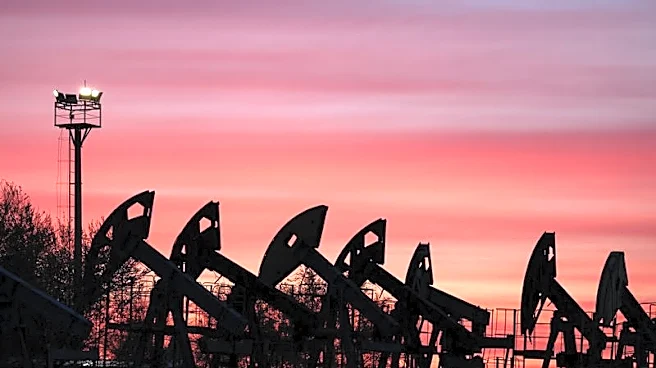
The Strait of Hormuz is a vital chokepoint for the global energy market, and its closure or restricted access could have significant implications for oil prices and global economic stability. President Trump's warning highlights the geopolitical tensions surrounding the strait and the potential for military conflict. The situation underscores the strategic importance of the region and the need for diplomatic solutions to prevent escalation. The outcome of these negotiations could impact international relations, energy markets, and regional security dynamics, affecting stakeholders ranging from governments to global corporations.
What's Next?
Negotiations are ongoing, with the possibility of an interim deal being announced soon. The U.S. and its allies will continue to monitor the situation closely, as any disruption in the strait could have far-reaching consequences. Diplomatic efforts will likely intensify to secure a long-term resolution that ensures the free flow of maritime traffic. The international community will be watching for any signs of escalation or resolution, as the outcome will influence global energy markets and geopolitical stability. The situation remains fluid, with potential for both diplomatic breakthroughs and further confrontations.