






What's Happening?
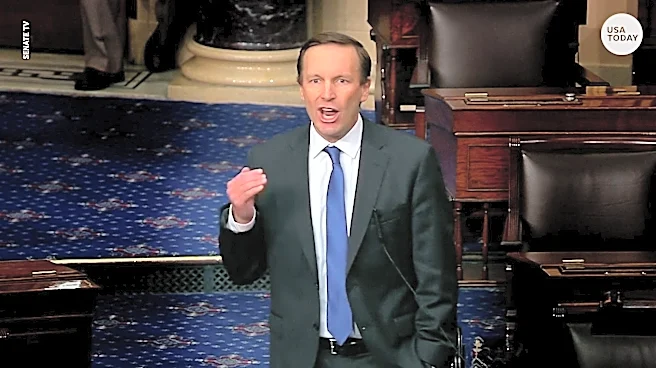
Senator Chris Murphy, a 53-year-old Democrat from Connecticut, was hospitalized at Johns Hopkins Hospital after experiencing a stroke on Saturday, October 31. According to a statement from his chief of staff, Allison Herwitt, Senator Murphy first noticed
numbness in his arm while attending his son's hockey game. He was initially transported to a local hospital before being transferred to Johns Hopkins for more specialized monitoring and care. Herwitt reported that doctors are encouraged by his progress, noting that he is awake and alert, and there is optimism for a full recovery. Senator Murphy has served in the Senate since 2013 and is recognized for his work on gun reform, particularly following the Sandy Hook school shooting. He has also been active in foreign policy discussions and has been campaigning for upcoming midterm elections, traveling to states such as Michigan and Florida to support various candidates.
Why It's Important?
The hospitalization of Senator Chris Murphy carries significant implications given his prominent role in the U.S. Senate and his potential future political aspirations. As a key advocate for gun reform and an active participant in foreign policy, his temporary absence or any long-term health impact could affect legislative efforts and ongoing debates in Congress. His health status is particularly relevant as he has been considered a potential candidate for the 2028 presidential election, making his recovery a point of interest for political observers and potential voters. The situation also highlights the health challenges that can face public officials, drawing comparisons to other lawmakers who have experienced similar health issues while in office. The continuity of his legislative work and his influence within the Democratic Party will be closely watched as he recovers.
What's Next?
Following Senator Murphy's hospitalization, the immediate focus will be on his recovery and the updates provided by his medical team and chief of staff. While his office remains optimistic about a full recovery, the timeline for his return to full duties in the Senate is yet to be determined. His legislative agenda, particularly his work on gun reform and foreign policy, may see temporary adjustments or require other senators to step in during his recovery period. Political discussions will likely continue regarding his potential candidacy for the 2028 presidential election, with his health status becoming a factor in future considerations. Stakeholders, including his constituents, fellow lawmakers, and political analysts, will be closely monitoring his progress and any further announcements from his office regarding his health and return to public life.
Beyond the Headlines
Senator Murphy's stroke brings to light broader discussions about the intense pressures and demands placed on public officials, whose roles often involve extensive travel, long hours, and high-stress decision-making. Such health incidents can prompt a re-evaluation of the support systems available to lawmakers and the expectations placed upon them. Furthermore, it underscores the human element in politics, reminding the public that even prominent figures are susceptible to health challenges. The event may also spark conversations about transparency in reporting the health of public figures, especially those in critical leadership positions or those considering higher office. The incident could also subtly influence the political landscape by shifting focus, even temporarily, from policy debates to the personal well-being of a key political figure, potentially affecting public perception and political narratives.