








What's Happening?
Oil prices have decreased as optimism grows over the progress of U.S.-Iran talks, which have eased supply concerns. President Trump announced that recent meetings in Qatar were positive, contributing to the decline in oil prices. Brent futures fell by
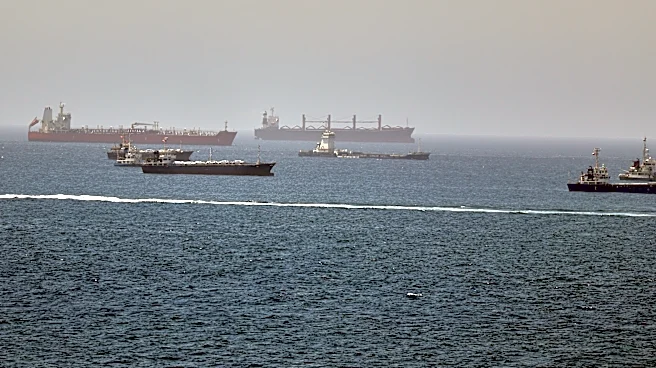
1.30% to $72.00 a barrel, while U.S. West Texas Intermediate crude dropped by 0.78% to $68.96 a barrel. The negotiations in Qatar aim to secure a lasting ceasefire and ensure the flow of shipping through the Strait of Hormuz. This development follows a significant drop in oil prices during the second quarter, marking the largest quarterly decline since the global financial crisis in 2008. The reopening of the Strait of Hormuz has alleviated fears of prolonged supply disruptions, leading analysts to adjust their 2026 oil price forecasts downward for the first time since the Iran war began.
Why It's Important?
The progress in U.S.-Iran talks and the subsequent decline in oil prices have significant implications for global energy markets and geopolitical stability. Lower oil prices can benefit consumers and industries reliant on oil, potentially reducing costs and stimulating economic activity. However, oil-producing countries may face revenue challenges, impacting their economies. The easing of tensions in the Middle East could lead to more stable energy supplies, reducing the risk of price volatility. Additionally, the potential increase in output targets by OPEC+ countries could further influence global oil supply dynamics. The situation underscores the interconnectedness of geopolitical events and energy markets, highlighting the importance of diplomatic efforts in maintaining stability.
What's Next?
As the U.S. and Iran continue their negotiations, the focus will be on securing a lasting ceasefire and ensuring the free flow of shipping through the Strait of Hormuz. The upcoming OPEC+ meeting, where further output hikes may be agreed upon, will be closely watched by market participants. The release of official U.S. oil stock data by the Energy Information Administration will provide further insights into supply dynamics. Stakeholders, including governments and energy companies, will need to navigate the evolving geopolitical landscape and its impact on oil markets. Continued diplomatic efforts will be crucial in maintaining stability and preventing further disruptions.