





What's Happening?
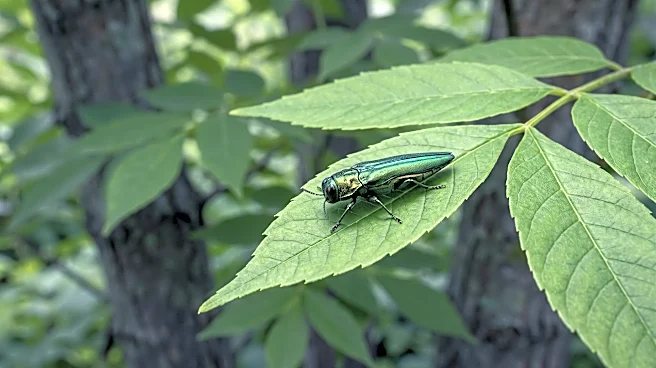
The Emerald Ash Borer (EAB), an invasive metallic green beetle, has been found in Washington State for the first time. This discovery is considered devastating for the ash trees of the Pacific Northwest. The beetle, originally from Asia, was first identified
in North America in Michigan in 2002 and has since caused widespread destruction of ash trees across the continent. There are currently no permanent solutions to control the EAB, and even insecticides offer only limited effectiveness. The beetle devastates both wild ash populations and urban street trees, as it lacks natural environmental controls in its introduced range. Trials using biological controls, such as parasitic wasps, have largely been unsuccessful.
Why It's Important?
The arrival of the Emerald Ash Borer in Washington State poses a significant ecological and economic threat to the Pacific Northwest. Ash trees are a common component of both urban landscapes and natural ecosystems, and their widespread loss could alter local biodiversity and ecosystem functions. The destruction of urban ash trees will lead to substantial costs for removal and replacement, impacting municipal budgets and property owners. Furthermore, the loss of ash trees could affect industries reliant on ash wood, such as furniture making or sporting goods. The lack of effective long-term solutions means that the region faces an inevitable decline and disappearance of ash trees, similar to the devastation seen in other parts of the U.S. over the past two decades.
What's Next?
Efforts will likely focus on slowing the expansion of the Emerald Ash Borer within Washington State and the broader Pacific Northwest. This may involve increased monitoring, public awareness campaigns, and potential quarantine measures to prevent the spread of infested wood. Research into more effective control methods, including biological controls or new insecticides, may also intensify. Local communities and environmental groups will need to prepare for the eventual loss of ash trees and plan for their replacement with more resistant species. The long-term outlook suggests a significant transformation of both urban and wild landscapes as ash trees decline and disappear.
Beyond the Headlines
The Emerald Ash Borer's arrival highlights the ongoing challenge of invasive species and their profound impact on ecosystems and economies. This event underscores the interconnectedness of global trade and environmental health, as the beetle was accidentally introduced to North America. It also raises questions about the resilience of native ecosystems to non-native threats and the effectiveness of current biosecurity measures. The situation could trigger broader discussions on proactive strategies for preventing invasive species introductions and developing more robust ecological restoration plans. The emotional and cultural loss associated with the disappearance of a prominent tree species also represents a less tangible but significant impact on communities.