
What's Happening?
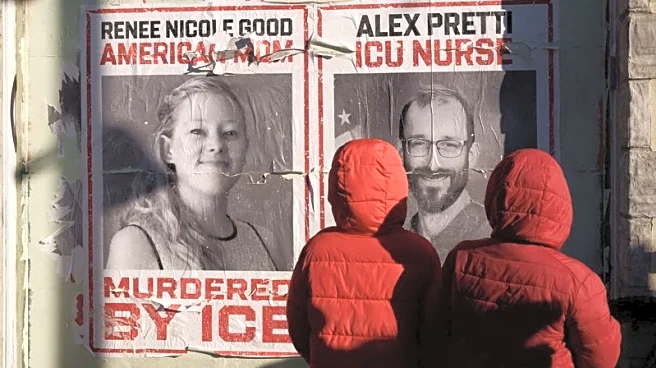
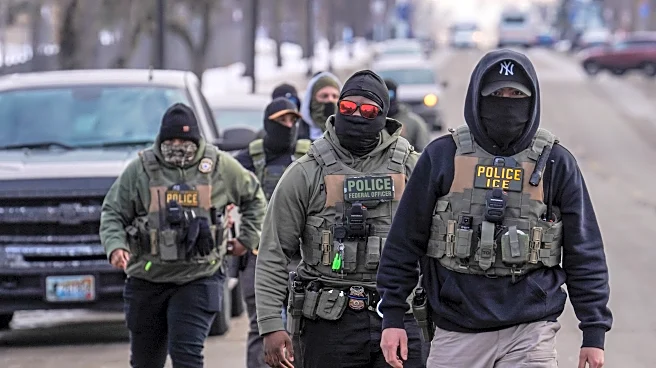
The Department of Homeland Security has deployed approximately 2,500 ICE agents in Minneapolis as part of the Trump administration's intensified immigration crackdown. This move follows the recent shooting
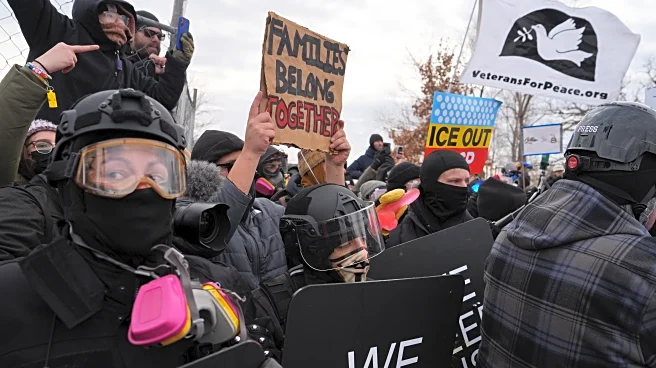
of Renee Macklin Good, a 37-year-old, by an ICE agent, which has sparked widespread protests and confrontations across the city. The streets of Minneapolis, particularly in immigrant neighborhoods, have become quiet and tense, with civilians patrolling to watch for ICE agents. Protests have been organized daily, with community groups advising against engaging with far-right activists to prevent escalation. President Trump has threatened to invoke the Insurrection Act to deploy military forces to manage the unrest, although he has recently stepped back from this position. A federal judge has issued an injunction preventing ICE agents from using force against peaceful protesters.
Why It's Important?
The situation in Minneapolis highlights the ongoing national debate over immigration enforcement and civil rights. The deployment of ICE agents and the potential use of the Insurrection Act underscore the federal government's aggressive stance on immigration, which has significant implications for immigrant communities and civil liberties. The protests reflect broader societal tensions and the community's resistance to federal immigration policies perceived as harsh and unjust. The federal investigation into Minnesota officials, including Governor Tim Walz and Mayor Jacob Frey, for allegedly impeding federal agents, further complicates the political landscape, raising concerns about the use of federal power to target political opponents.
What's Next?
The situation in Minneapolis is likely to remain tense as protests continue and the federal investigation into state officials progresses. The community's response and the federal government's actions will be closely watched, with potential implications for national immigration policy and civil rights. The outcome of the investigation and any further federal actions could influence public opinion and political dynamics ahead of upcoming elections. Stakeholders, including civil rights organizations and political leaders, may increase their advocacy efforts to address the perceived overreach of federal immigration enforcement.