






What's Happening?
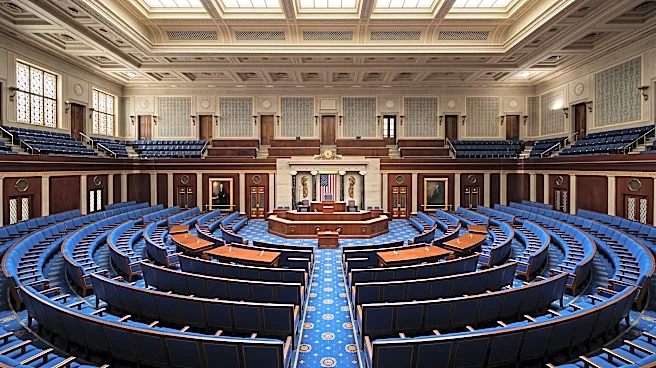
Congressman Mark Harris (NC-08) announced the passage of H.R. 4499 in the U.S. House of Representatives on August 31, 2026. This bipartisan legislation marks the sixth bill sponsored by Congressman Harris to pass the House. H.R. 4499 focuses on making
technical corrections to federal statutes and updating references to provisions that have been reclassified to Title 34 of the United States Code. Title 34 specifically covers Crime Control and Law Enforcement. The Office of the Law Revision Counsel (OLRC) is responsible for preparing and publishing the United States Code, and in 2017, they moved various laws into Title 34 to ensure proper organization. Congressman Harris emphasized that while these changes are technical, they are crucial for maintaining an accurate and accessible United States Code. He expressed gratitude to the OLRC and the Judiciary Committee for their work on these necessary adjustments.
Why It's Important?
The passage of H.R. 4499 is important because it ensures the clarity and accuracy of federal law, which is fundamental to the functioning of the U.S. legal system. By updating references and making technical corrections, the legislation helps prevent misinterpretations and inconsistencies in the application of laws related to crime control and law enforcement. An accurate and accessible United States Code is vital for legal professionals, law enforcement agencies, and the public to understand their rights and obligations. Without such corrections, outdated references could lead to confusion, legal challenges, and inefficiencies in the justice system. This bill streamlines the legal framework, making it more efficient and reliable for all stakeholders involved in upholding and interpreting federal statutes. The bipartisan nature of the bill also highlights a collaborative effort in Congress to address foundational legal infrastructure.
What's Next?
Following its passage in the U.S. House of Representatives, H.R. 4499 will now proceed to the Senate for consideration. If passed by the Senate, it will then be sent to the President for signature to become law. The technical nature of the bill suggests it may face fewer obstacles than more contentious legislation, potentially leading to a smoother passage through the remaining legislative steps. The Office of the Law Revision Counsel will continue its ongoing work of maintaining and updating the United States Code, and similar technical correction bills may be introduced in the future as laws evolve and are reclassified. The successful implementation of these corrections will contribute to the long-term integrity and usability of federal legal documents.
Beyond the Headlines
Beyond the immediate technical adjustments, the passage of H.R. 4499 underscores the continuous, often unseen, work required to maintain the foundational legal infrastructure of the United States. This process highlights the importance of legislative housekeeping, ensuring that the vast body of federal law remains coherent and navigable. It also reflects the dynamic nature of legal codification, where ongoing efforts are needed to adapt to changes in legal classifications and terminology. The reliance on the Office of the Law Revision Counsel demonstrates the critical role of specialized, non-partisan bodies in supporting the legislative process by providing the expertise necessary for such detailed statutory revisions. This type of legislation, while not always in the public spotlight, is essential for the stability and efficiency of the rule of law.