









What's Happening?
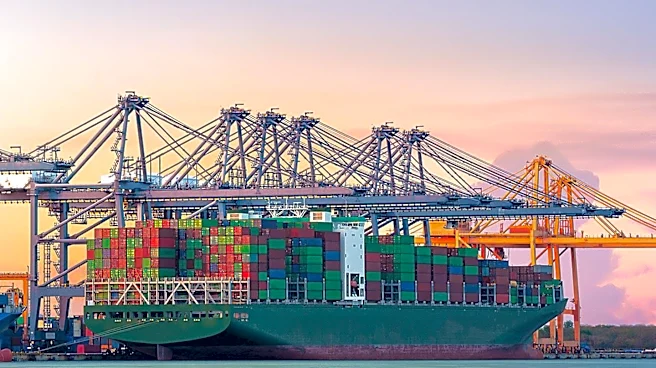
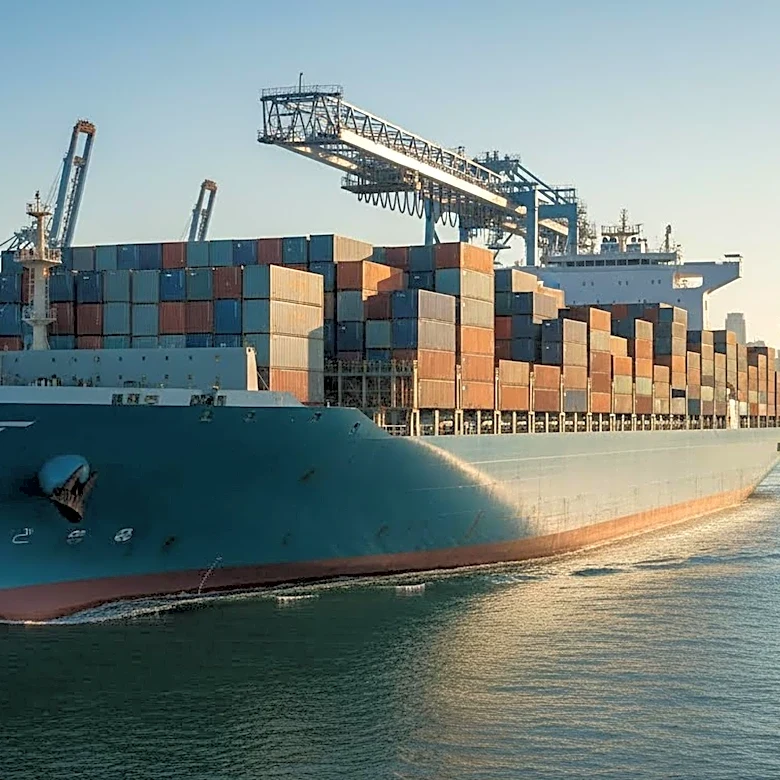
In the first half of 2026, Chinese shipyards have significantly increased their new order volume, securing 1,131 out of 1,481 vessels ordered worldwide, according to Clarksons data. This accounts for 72% of the global market share, maintaining China's
dominant position in the shipbuilding industry. The orders include high-volume, low-complexity vessels like small boxships and bulkers, as well as major accounts such as MSC, the world's leading container line, which has a 100% Chinese orderbook for its fleet. In contrast, South Korean shipyards, while increasing their orders by 60% compared to the previous year, only captured a fifth of the global market share. Korean yards are focusing on more profitable vessel classes, such as LNG carriers, where they hold about two-thirds of the global orderbook.
Why It's Important?
China's dominance in the shipbuilding industry underscores its strategic economic positioning and influence in global trade. By securing a majority of the shipbuilding orders, China strengthens its industrial capabilities and economic leverage. This development could impact global shipping dynamics, with potential shifts in trade routes and logistics strategies. South Korea's focus on high-value vessels like LNG carriers highlights a strategic pivot towards profitability over volume, which may influence future competitive dynamics in the industry. The continued expansion of China's shipbuilding capacity could also affect international relations, particularly with countries reliant on maritime trade.
What's Next?
As China continues to expand its shipbuilding capabilities, it is likely to further consolidate its position as a global leader in the industry. This may prompt other countries, particularly South Korea, to innovate and diversify their offerings to remain competitive. The strategic focus on high-value vessels by Korean yards could lead to advancements in technology and efficiency in shipbuilding. Additionally, global shipping companies may increasingly rely on Chinese shipyards for fleet expansion, potentially altering the balance of power in maritime logistics and trade.