



What's Happening?
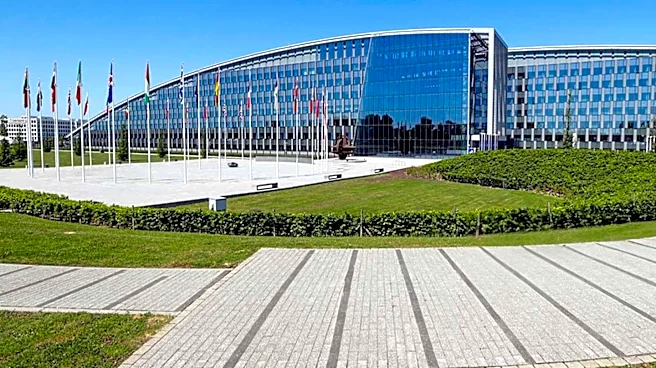
South Korean President Yoon Suk Yeol is scheduled to discuss the threats posed by North Korea, particularly its military relations with Russia, at an upcoming NATO summit in Washington. This marks Yoon's second attendance at a NATO summit, having been
the first South Korean leader to participate in 2022. South Korea, along with Australia, Japan, and New Zealand, are Asian-Pacific partners invited to the talks. The discussions come amid deteriorating relations between South Korea and Russia, primarily due to Moscow's alleged receipt of ballistic missiles and artillery from Pyongyang for the conflict in Ukraine. Both Russia and North Korea have denied these claims. President Yoon emphasized that military cooperation between Russia and North Korea presents a significant threat to peace and security on the Korean peninsula and in Europe. He also stated that the future of South Korea-Russia relations hinges entirely on Russia's actions.
Why It's Important?
The participation of South Korean President Yoon Suk Yeol at the NATO summit to address North Korea's military ties with Russia underscores the expanding global implications of regional conflicts. For the U.S. and its allies, this highlights the interconnectedness of security challenges across continents. North Korea's alleged provision of military aid to Russia could prolong the conflict in Ukraine, impacting global stability and potentially drawing more nations into proxy confrontations. This situation also complicates U.S. foreign policy, as it seeks to maintain alliances in both Europe and the Indo-Pacific while countering Russian aggression and North Korean proliferation. The discussions at NATO could lead to increased international pressure on both Russia and North Korea, potentially resulting in new sanctions or diplomatic efforts. Furthermore, it signals a growing alignment between NATO and key Asian partners in addressing shared security concerns, which could reshape future international defense strategies and alliances.
What's Next?
President Yoon Suk Yeol's attendance at the NATO summit in Washington is expected to lead to further discussions and potential strategic alignments regarding the North Korea-Russia military cooperation. South Korea's decisions on providing weapons support to Ukraine will likely be influenced by the implementation of the new military agreement between Moscow and Pyongyang. The summit could result in a unified stance from NATO and its Asian partners, potentially leading to new diplomatic initiatives or increased sanctions against Russia and North Korea. President Yoon has expressed hope that Russia will make a 'wise decision' regarding its relationship with South Korea, suggesting that future bilateral relations are contingent on Russia's actions concerning North Korea. The outcome of these discussions will be closely watched by international observers, as they could set precedents for how global alliances respond to intertwined security threats.
Beyond the Headlines
The convergence of security concerns from the Korean Peninsula and Eastern Europe at a NATO summit reveals a significant shift in global geopolitical dynamics. The alleged military cooperation between Russia and North Korea blurs traditional regional security boundaries, suggesting a more integrated and complex threat landscape. This development challenges the conventional understanding of alliances and adversaries, pushing nations like the U.S. to adopt a more holistic approach to national security that spans multiple theaters. It also raises ethical questions about the responsibilities of global powers in preventing the proliferation of weapons and maintaining international norms. The situation could lead to a re-evaluation of non-proliferation treaties and the role of international bodies in enforcing them. Moreover, the increased collaboration between NATO and Asian partners could signify the emergence of a broader, interconnected security framework designed to counter authoritarian regimes, potentially reshaping the future of international relations and collective defense.