


What's Happening?
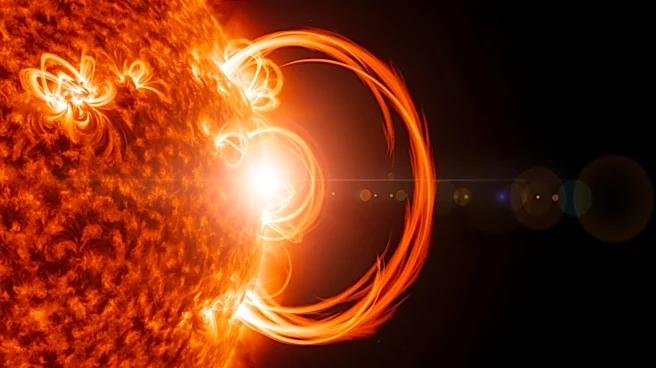
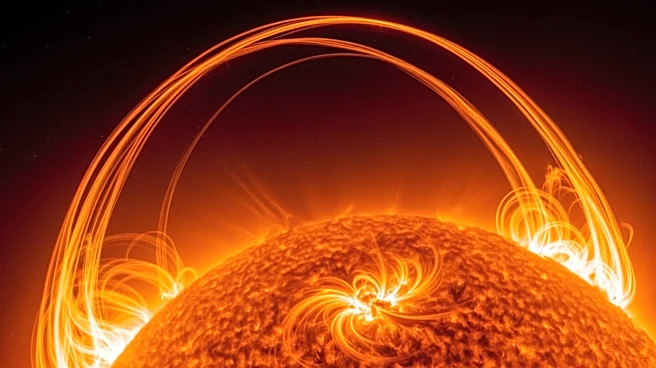
Astrophotographer Mark Johnston has captured two striking videos of solar prominences, which are massive clouds of glowing plasma suspended above the sun by magnetic fields. The first video, taken on May 22, 2026, shows a prominence releasing streams
of material that fall back toward the sun as coronal rain. The second video, from May 31, 2026, reveals a 'Godzilla'-like prominence looming above the solar surface. Johnston, who filmed these phenomena from his backyard in Scottsdale, Arizona, used a 160mm refractor with a specialized hydrogen-alpha solar filter. He explained that the movement of the plasma, which may appear wind-swept, is primarily controlled by the sun's magnetic field rather than wind. The hydrogen on the sun is ionized, allowing magnetic fields to guide it along invisible lines. Johnston emphasizes that while the prominences resemble fiery eruptions, they are not flames; the sun's hydrogen is so hot that it glows, similar to a red-hot stove.
Why It's Important?
These observations by Johnston provide valuable insights into solar activity, which can have significant implications for Earth. Solar prominences and other solar phenomena can affect space weather, potentially disrupting satellite communications, GPS systems, and power grids on Earth. Understanding these solar activities is crucial for preparing and mitigating their impacts on technology and infrastructure. Additionally, such observations contribute to the scientific community's knowledge of solar dynamics and magnetic fields, which are essential for predicting solar storms and protecting technological assets. Johnston's work also highlights the role of amateur astronomers in contributing to scientific research and public understanding of space phenomena.
What's Next?
As solar activity continues to be a subject of interest, further observations and studies are expected to enhance understanding of the sun's behavior. Scientists and amateur astronomers alike will likely continue to monitor solar prominences and other phenomena to gather data that can improve predictive models of space weather. This ongoing research is vital for developing strategies to protect Earth's technological infrastructure from potential solar disruptions. Additionally, public interest in solar observations may increase, leading to more educational initiatives and resources for those interested in astronomy.
Beyond the Headlines
The capture of these solar prominences also underscores the importance of safe solar observation practices. Johnston's use of specialized equipment highlights the need for proper tools to safely view the sun, as direct observation without certified solar filters can be dangerous. This serves as a reminder of the risks associated with solar observation and the importance of public education on safe practices. Furthermore, the visual appeal of these phenomena may inspire greater public interest in astronomy and science, fostering a broader appreciation for the complexities of our solar system.