



What's Happening?
The Russian government has instructed its major banks, including the federal reserve, to independently manage the threat of Ukrainian drones by shooting them down. This directive comes as Russia faces challenges in defending its vast territory against
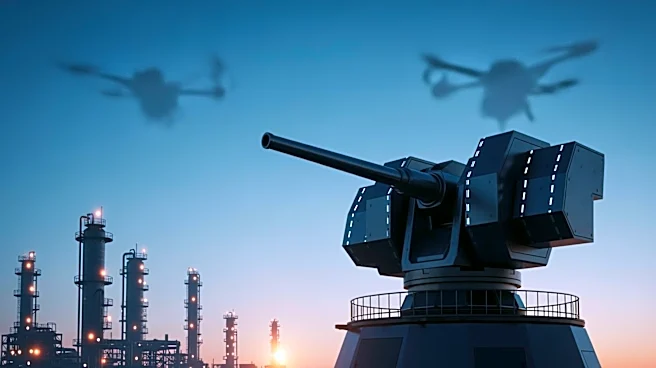
Ukrainian attacks, which have targeted key infrastructure and military equipment. The Russian parliament has passed a law allowing banks, such as Sberbank, to operate defense systems and arm their staff against drones without the involvement of special forces. This move is part of a broader strategy to bolster Russia's air defenses, which have been stretched thin due to concentrated deployments in certain areas like Moscow. The legislation requires banks to bear the costs of these defense measures themselves.
Why It's Important?
This development underscores the increasing strain on Russia's conventional air defenses as Ukraine continues to innovate in drone warfare. By involving financial institutions in defense efforts, Russia is attempting to decentralize its air defense strategy, potentially leading to a more robust response to drone threats. However, this approach also highlights the challenges Russia faces in maintaining comprehensive air defense coverage across its territory. The decision to arm bank staff and install jamming systems could have significant implications for the security and operational focus of these financial institutions. Additionally, this move may escalate tensions further, as it represents a shift in the traditional roles of civilian entities in military defense.
What's Next?
As Russia implements this new defense strategy, it is likely to face both logistical and operational challenges in equipping and training bank staff for these new responsibilities. The international community, particularly countries allied with Ukraine, may respond with increased diplomatic pressure or sanctions. Furthermore, Ukraine and its allies may seek to counter these measures by enhancing their own drone capabilities or by targeting the newly armed financial institutions. The situation could lead to further escalation in the conflict, with potential impacts on international relations and economic stability in the region.
Beyond the Headlines
The involvement of civilian institutions like banks in military defense raises ethical and legal questions about the militarization of non-military entities. This strategy blurs the lines between civilian and military roles, potentially putting civilian employees at risk and complicating international humanitarian law considerations. Additionally, the financial burden placed on banks to fund these defense measures could impact their financial stability and operational priorities, potentially affecting the broader Russian economy.