






What's Happening?
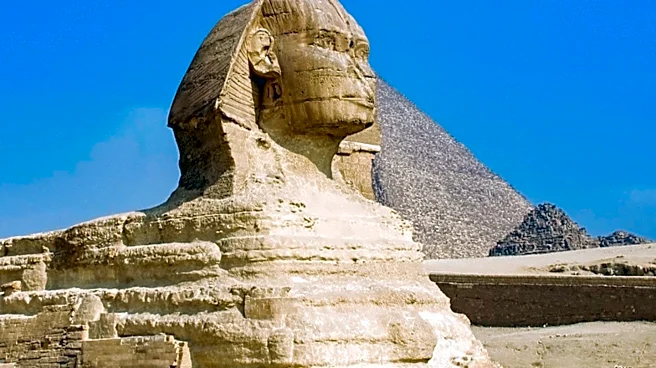
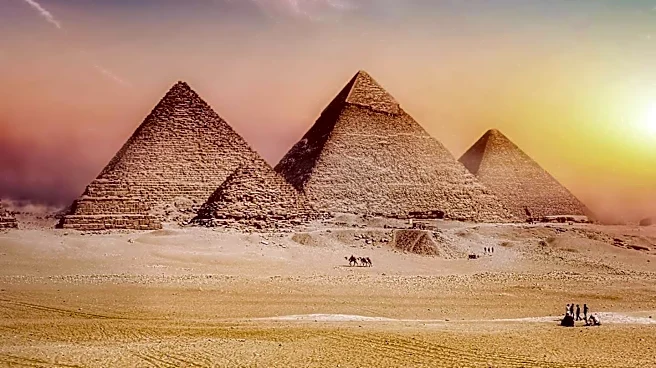
Paleontologists have identified a new species of ancient crocodilian, named Herugavialis cairensis, from fossilized remains discovered in the Mokattam Formation in northern Egypt. This limestone bedrock is the same material used to construct the Great
Sphinx and the pyramids at Giza. The species, which roamed a shallow sea approximately 45 million years ago, adds to the understanding of gharial diversity and evolution. One key fossil, a nearly complete skull unearthed in the 1920s, notably resembles the Sphinx due to its missing snout tip, inspiring the genus name 'Herugavialis' after the Egyptian god Horus. Initially misclassified as Tomistoma cairense in 1927 due to its resemblance to the false gharial, new evolutionary analyses and CT scans revealed it to be a distinct genus. Herugavialis cairensis possessed razor-sharp, pointed teeth and a long, thin snout adapted for catching fish, with eyes protruding like a telescope, similar to the modern Indian gharial. The Mokattam Formation has preserved numerous prehistoric marine fossils, including fish, sharks, and early whales, offering a glimpse into Egypt's ancient marine ecosystem.
Why It's Important?
The discovery of Herugavialis cairensis is significant for several reasons. It expands the scientific understanding of gharial evolution, a group of crocodilians with a complex and widespread fossil record, despite only two species existing today. This reclassification highlights the importance of re-evaluating existing museum collections, as many fossils may hold new insights when subjected to modern analytical techniques. For the U.S. scientific community, this research contributes to the global paleontological discourse, offering comparative data for studies on ancient ecosystems and crocodilian lineages found in North America. Understanding the diversity of ancient predators like Herugavialis provides a clearer picture of past marine environments and how ecosystems functioned during warmer periods, such as the Eocene epoch. This knowledge can inform current ecological studies and conservation efforts by illustrating the long-term impacts of environmental changes on species diversity and distribution.
What's Next?
Further research will likely focus on uncovering more fossils within the Mokattam Formation and re-examining other misclassified specimens in museum collections to identify additional new species. Scientists anticipate that larger fossils, potentially including prehistoric turtles, may still be embedded within the monuments themselves. The analysis of these finds will continue to refine the understanding of ancient marine ecosystems in Egypt and the broader Mediterranean region. The study also underscores the need for continued investment in paleontological research and advanced imaging techniques to unlock the secrets held within existing fossil records. This ongoing work will contribute to a more comprehensive global picture of prehistoric life and evolutionary pathways, potentially influencing how U.S. paleontologists approach their own regional studies and museum collections.
Beyond the Headlines
The naming of Herugavialis cairensis, with its coincidental resemblance to the Great Sphinx, adds a unique cultural and historical layer to a scientific discovery. This connection between ancient natural history and human civilization underscores how geological formations have shaped both the environment and human endeavors. The re-evaluation of old specimens using new technology highlights a broader trend in science: the continuous refinement of knowledge through technological advancement and interdisciplinary approaches. This discovery also subtly reinforces the idea that the past holds many undiscovered secrets, even in well-studied regions, and that our understanding of life's history is constantly evolving. The ethical implications of preserving and studying such ancient remains, particularly when they are intertwined with cultural heritage sites, also come into focus, emphasizing the need for careful collaboration between paleontologists, archaeologists, and local authorities.