








What's Happening?
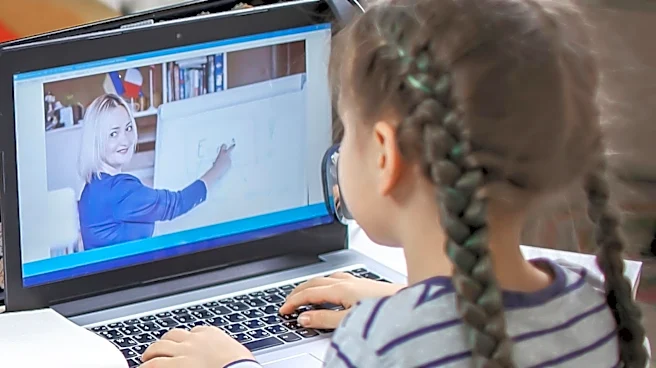
An increasing number of parents of children with disabilities, like Katherine Walter, are choosing to homeschool their children, citing concerns that public schools are failing to adequately meet their children's needs. Despite federal laws guaranteeing
services and protections for students with disabilities, some parents feel their children are better served at home. In many states, these parents are receiving taxpayer funds to support their homeschooling efforts. The Walters' decision to homeschool their son, Will, who has autism and a neurological speech disorder, stemmed from an incident where a teacher allegedly restrained him, leading to a lawsuit and a settlement with the school district. This case highlights a broader trend where parents are foregoing their rights to public school services in favor of personalized home education, often at significant personal and financial cost for specialized therapies.
Why It's Important?
This trend has significant implications for the U.S. public education system and the provision of special education services. While federal law mandates a 'least restrictive environment' for students with disabilities, the increasing number of parents opting out suggests a perceived failure of public schools to deliver on this promise effectively. The financial support provided by states for homeschooling, while intended to help families, also raises questions about resource allocation and the potential impact on public school funding. Advocates for children with disabilities argue that these scholarships may inadvertently harm students by removing them from environments where their rights are federally protected and by providing insufficient funds for comprehensive care. This situation underscores a tension between parental choice, individualized needs, and the systemic capacity of public education to serve all students.
What's Next?
The debate over homeschooling for students with disabilities is likely to continue, with potential legislative and policy discussions regarding the balance between parental autonomy, public school accountability, and funding mechanisms. States may face pressure to either enhance public school special education programs to retain students or to refine scholarship programs to ensure adequate support for those who homeschool. The legal and ethical implications of physical restraint in schools will also remain a critical area of focus, potentially leading to more stringent regulations or training requirements for school staff. The case of the Walters, who successfully lobbied for a scholarship program in Montana (though it was later paused), indicates that parents will continue to advocate for solutions that they believe best serve their children's unique needs, potentially influencing educational policy nationwide.
Beyond the Headlines
The decision to homeschool a child with significant disabilities carries profound ethical and social dimensions. While parents like Katherine Walter believe they are the best educators for their children, removing students from public school environments can isolate them from peer interactions and the broader social development opportunities that schools provide. It also places an immense burden on parents, who must become full-time educators and therapists, often at great personal and financial sacrifice. The reliance on taxpayer-funded scholarships, while offering some relief, also raises questions about the long-term sustainability and equity of such programs. This situation highlights a systemic challenge: how to ensure that all children, regardless of their abilities, receive a high-quality, inclusive education that prepares them for life, while respecting parental choices and addressing the complex needs of diverse learners.