


What's Happening?
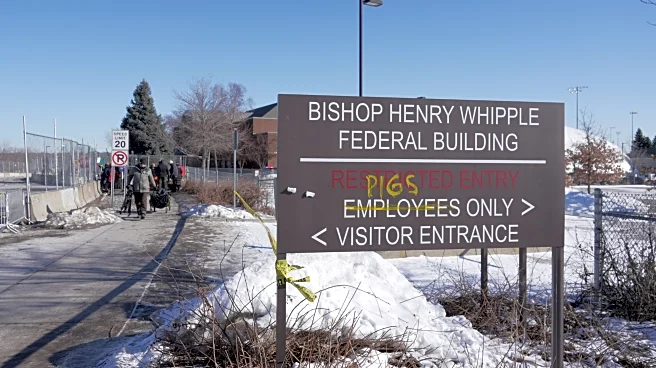
A federal judge has blocked a Trump administration policy that allowed for the arrest and detention of certain refugees in Minnesota. The policy targeted refugees who had been in the U.S. for over a year without obtaining a green card. The judge ruled
that the policy was based on an incorrect interpretation of federal law and unlawfully targeted refugees who had been lawfully admitted to the U.S. The ruling provides preliminary relief to refugees in Minnesota, preventing their arrest solely based on their immigration status after one year in the country.
Why It's Important?
This ruling has significant implications for the rights of refugees and the interpretation of immigration law. It challenges the Trump administration's policy and underscores the importance of judicial oversight in protecting the rights of vulnerable populations. The decision may influence similar cases across the country and contribute to broader discussions about the treatment of refugees and the responsibilities of the U.S. government. It also highlights the potential for legal challenges to shape immigration policy and protect individuals from unjust enforcement actions.
What's Next?
The case will continue to develop as the court considers the broader implications of the policy and its impact on refugees. Legal advocates may use this ruling to challenge similar policies in other states and push for reforms that ensure the protection of refugees' rights. The decision could also influence legislative discussions about immigration policy and the treatment of refugees in the U.S. The outcome of this case may set a precedent for how similar cases are handled in the future.
Beyond the Headlines
The ruling highlights the broader implications of immigration policy on refugees and the potential for legal challenges to protect their rights. It raises questions about the role of the judiciary in interpreting immigration law and the balance of power between the executive and judicial branches. The case also underscores the importance of advocacy and legal representation in protecting the rights of vulnerable populations and ensuring that immigration policies align with constitutional principles.