



What's Happening?
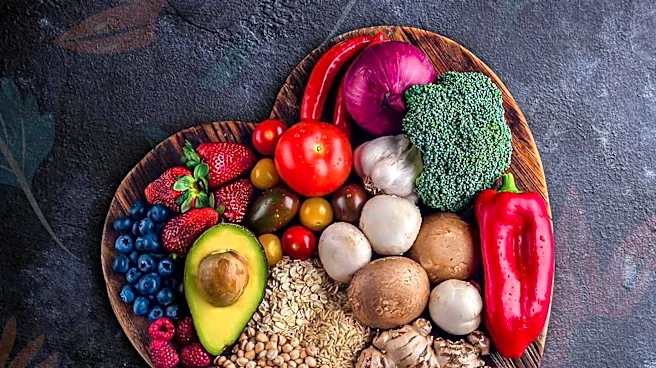
A recent study presented at the American Association for Cancer Research conference has sparked controversy by suggesting that consuming fruits, vegetables, and whole grains may increase the risk of lung cancer. The study, which has not yet been peer-reviewed,
analyzed dietary data from 166 non-smokers who developed lung cancer under the age of 50. Researchers grouped participants based on cancer mutations and dietary quality scores, finding higher consumption of fruits and vegetables compared to the general population. Experts have criticized the study for its small size, lack of a control group, and speculative conclusions. Baptiste Leurent, an associate professor in Medical Statistics at University College London, highlighted the study's significant flaws, noting that it contradicts decades of evidence supporting the health benefits of fruits and vegetables.
Why It's Important?
The study's claims challenge established nutritional guidelines that advocate for the consumption of fruits and vegetables as part of a healthy diet. If taken seriously, such findings could influence public perception and dietary habits, potentially leading to decreased consumption of these foods. This could have broader implications for public health, as fruits and vegetables are known to reduce the risk of various chronic diseases. The controversy also underscores the importance of rigorous scientific methods and peer review in research, as flawed studies can mislead the public and policymakers.
What's Next?
The study is expected to undergo further scrutiny and peer review, which may either validate or refute its findings. In the meantime, health experts and organizations are likely to continue advocating for the consumption of fruits and vegetables based on existing evidence. The scientific community may also call for more comprehensive research to explore the relationship between diet and cancer risk, ensuring that future studies are methodologically sound and provide clear guidance for public health.