



What's Happening?
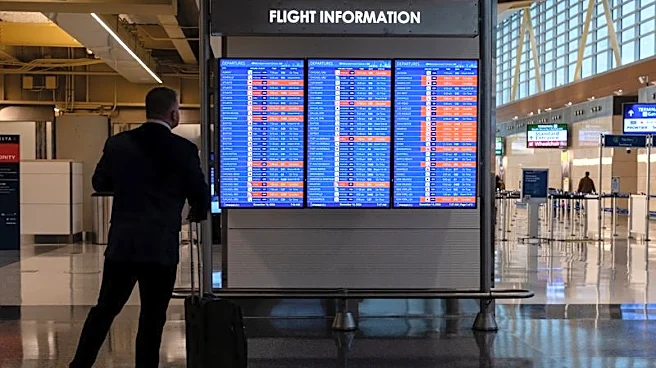
The Federal Aviation Administration (FAA) is investigating L3Harris Technologies Inc. for its potential role in a nationwide air traffic control shutdown on November 13. Transportation Secretary Sean Duffy stated that the disruption occurred during L3Harris's
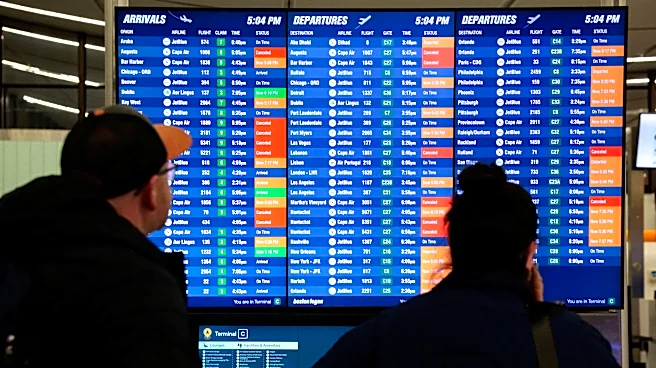
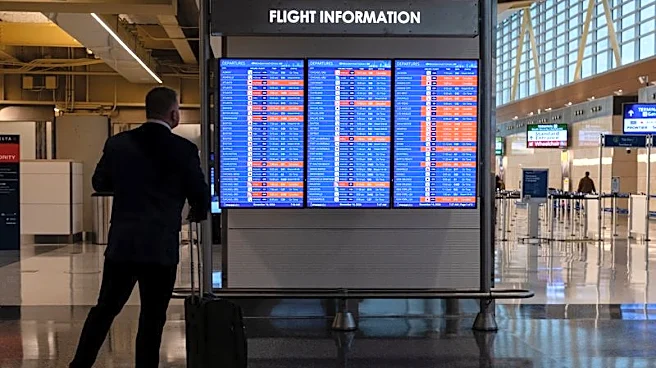
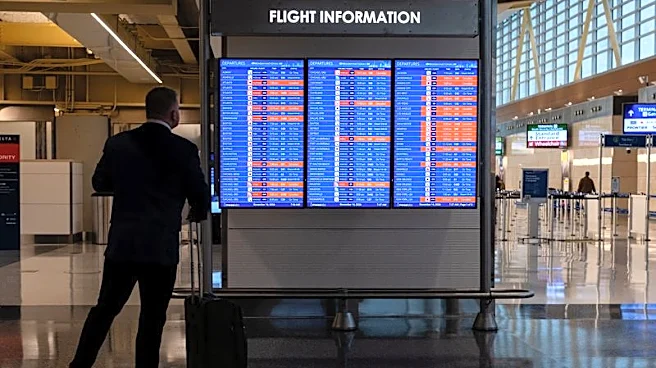
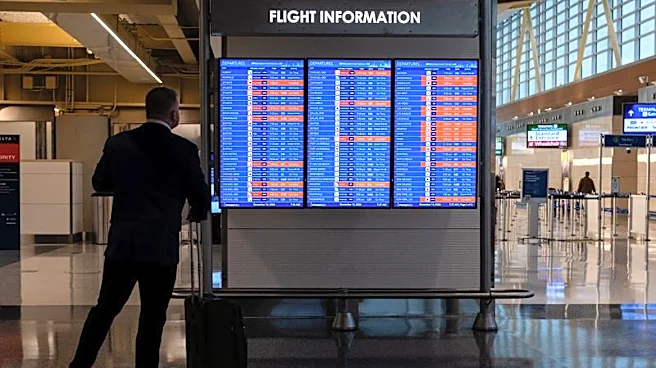
conversion of a copper network to fiber at a remote FAA facility. A router, part of the L3Harris operation, reportedly overwhelmed other routers with over 1,000 connection requests every 4 to 5 seconds, leading to a loss of aircraft communications and some radar feeds. This incident caused the longest nationwide flight halt since the September 11, 2001 attacks. FAA Administrator Bryan Bedford reported that approximately 12,000 flights were canceled on Friday, with an additional 4,000 to 5,000 cancellations projected for Saturday out of 41,000 scheduled flights. Secretary Duffy indicated that investigators are looking into whether the cause was 'incompetence,' suggesting a possible installation error or a faulty router, but emphasized that the exact fault has not yet been determined. Both officials confirmed there was no indication of artificial intelligence involvement or a cyberattack.
Why It's Important?
This incident highlights critical vulnerabilities within the U.S. air traffic control infrastructure and the significant impact that system failures can have on national transportation and the economy. The reliance on contractors like L3Harris for essential infrastructure upgrades, coupled with the aging nature of some FAA systems, raises questions about oversight, maintenance, and the resilience of these vital networks. The widespread flight cancellations resulted in substantial economic losses for airlines and businesses, disrupted travel plans for thousands of passengers, and underscored the fragility of interconnected systems. The investigation's findings could lead to stricter regulations for contractors, increased funding for infrastructure modernization, and a reevaluation of the FAA's procurement and oversight processes. The incident also brings to light the potential for single points of failure in complex technological systems to cascade into national-level disruptions, affecting not only the aviation industry but also broader economic activity and public confidence in critical services.
What's Next?
Transportation Secretary Sean Duffy announced that he would request $50 billion in emergency funding from Congress on Monday to modernize the aging air traffic control system. The ongoing investigation will aim to pinpoint the exact cause of the router malfunction and determine L3Harris's accountability. L3Harris has stated its cooperation with the FAA's investigation, acknowledging the serious impact of the ground stop. The FAA and airlines anticipate returning to full flight schedules by Sunday night. The outcome of the investigation could influence future government contracts for infrastructure projects and potentially lead to legal or financial repercussions for L3Harris, depending on the findings. Furthermore, this event is likely to intensify calls for greater investment in resilient and modern infrastructure across various critical sectors, not just aviation, to prevent similar disruptions in the future.
Beyond the Headlines
The incident underscores a broader national challenge concerning the state of critical infrastructure and the complex relationship between government agencies and private contractors. While the immediate focus is on the technical failure, deeper implications involve the ethical responsibilities of contractors handling sensitive national systems and the potential for cost-cutting measures or inadequate oversight to compromise public safety and national functionality. The 'incompetence' suggested by Secretary Duffy points to a potential systemic issue in how critical infrastructure projects are managed and executed. This event could trigger a re-evaluation of the balance between outsourcing specialized tasks to private companies and maintaining robust in-house expertise and control within government agencies. It also highlights the need for transparent accountability mechanisms when such failures occur, ensuring that the public and affected industries receive clear explanations and that corrective actions are implemented effectively to prevent recurrence.