





What's Happening?
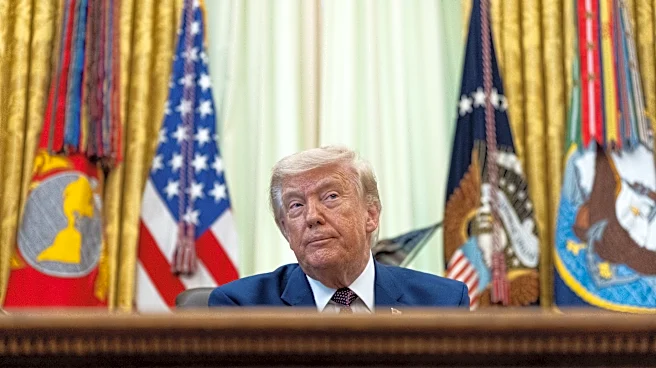
The Republican-led SAVE America Act, a comprehensive election overhaul, has failed to pass in the Senate. The act, which was a priority for President Trump, was introduced as an amendment to an immigration funding package but did not secure enough support
to overcome a filibuster. The legislation aimed to require all voters to present photo identification and mandated states to submit voter lists to a Department of Homeland Security tool, which has been criticized for erroneously flagging U.S. citizens. The proposal also included a requirement for voters to provide proof of U.S. citizenship during registration, a measure deemed unnecessary by experts due to the negligible incidence of noncitizen voting. Senate Majority Leader John Thune acknowledged the lack of sufficient Republican support to bypass the filibuster.
Why It's Important?
The failure of the SAVE America Act highlights the ongoing partisan divide over election integrity and voter access in the United States. The proposed changes, particularly the requirement for photo ID and proof of citizenship, have been contentious, with critics arguing they could disenfranchise millions of voters who lack easy access to such documentation. The debate underscores broader tensions about federal versus state control of election processes, with implications for future legislative efforts to reform voting laws. The act's defeat may influence upcoming elections and legislative priorities, as it reflects the challenges of enacting significant electoral reforms in a polarized political environment.
What's Next?
With the SAVE America Act's failure, future efforts to reform election laws may focus on building bipartisan support or addressing specific aspects of the proposed changes. The debate over voter ID laws and election security is likely to continue, potentially influencing legislative agendas and campaign strategies in the lead-up to future elections. Stakeholders, including political leaders and advocacy groups, may seek alternative approaches to address election integrity concerns while balancing voter access and security.