






What's Happening?
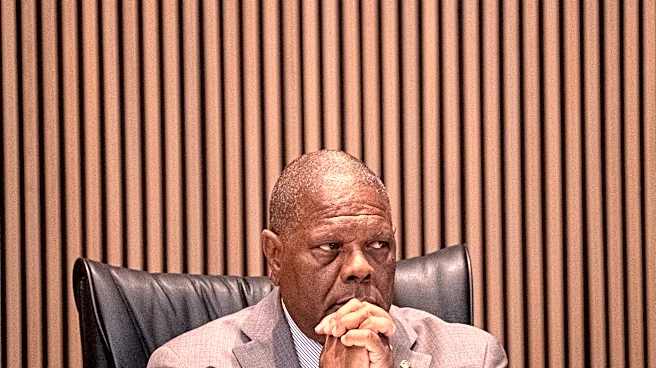
Ron Johnson is running for the Bemidji City Council At-Large position in the 2026 election. Johnson, a lifelong resident of Bemidji, previously served on the city council for 24 years, representing Ward 3 from 2001 to 2024. His prior tenure ended due
to redistricting, which made him ineligible to run for his former ward seat. After a two-year hiatus from city government, Johnson states he is re-energized and seeking to represent all five Bemidji Wards. His professional background includes 43 years as the Design/Promotion Manager for Lakeland Public Television, from which he retired in 2023. Johnson is a graduate of Bemidji State University, Alexandria Technical College, and Brown Institute of Minneapolis, and was an adjunct faculty member in the Visual Arts Department at Bemidji State University. He was recognized as a Bemidji State University Outstanding Alumni in 2010. His leadership experience includes serving on the Coalition of Greater Minnesota Cities Board of Directors for 20 years, including a term as President, and on the League of Minnesota Cities Board of Directors for 8.5 years, also serving as President.
Why It's Important?
Johnson's candidacy for the At-Large City Council seat is significant due to his extensive experience in local government and statewide leadership roles. His 24 years on the Bemidji City Council and his leadership positions in organizations like the Coalition of Greater Minnesota Cities and the League of Minnesota Cities provide him with a deep understanding of municipal operations and regional issues. His return to politics after a brief absence suggests a continued commitment to public service and a desire to leverage his experience for the benefit of Bemidji. The At-Large position is crucial as it represents the entire community, requiring a broad perspective on city-wide challenges such as public safety, affordable housing, and living wage jobs. Johnson's focus on these inter-related issues, particularly affordable housing as a catalyst for economic growth and improved public safety, highlights key concerns for Bemidji residents. His proposal to revise local ordinances and create a more developer-friendly environment to address housing shortages could have a substantial impact on the city's development and economic landscape.
What's Next?
As the 2026 election approaches, Ron Johnson will likely continue to campaign on his platform of addressing public safety, affordable housing, and living wage jobs in Bemidji. His proposals for tackling the housing issue, including leveraging state and federal grants and revising local ordinances, will be a central point of discussion. Voters will evaluate his long track record in city government and his vision for the city's future. The election outcome will determine whether Bemidji's City Council gains a member with extensive prior experience and a specific focus on these critical urban challenges. The debate around data centers, while not a current issue for Bemidji, could become relevant as Johnson has expressed a nuanced view on their pros and cons, acknowledging their economic benefits versus environmental concerns. His stance on managing the Sanford Center in-house to achieve savings will also be a point of interest for taxpayers.
Beyond the Headlines
Johnson's re-entry into local politics after a forced break due to redistricting underscores the dynamic nature of electoral boundaries and their impact on political careers. His emphasis on affordable housing as a foundational issue for economic growth and public safety reflects a growing recognition in many U.S. cities that these challenges are interconnected. This holistic approach to urban development, where housing is seen as a driver for job creation and crime reduction, represents a significant shift from more siloed policy-making. His experience with statewide organizations also suggests a potential for Bemidji to benefit from broader regional strategies and best practices. The discussion around data centers, even if not immediately pressing for Bemidji, highlights a national conversation about balancing technological advancement with environmental and community impacts, a theme that will likely continue to shape local policy decisions across the country.