








What's Happening?
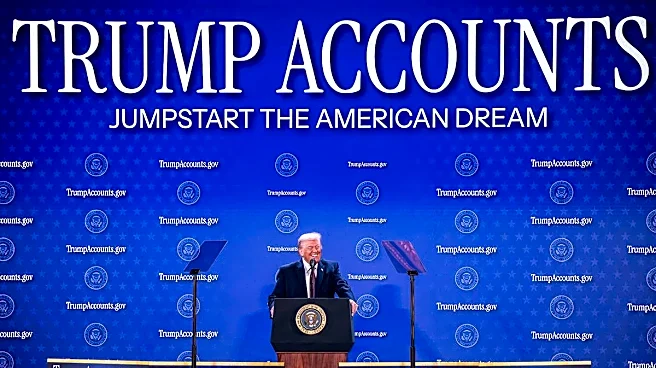
The U.S. Department of the Treasury is set to launch Trump Accounts on July 4, 2026, providing $1,000 in 'seed' money to approximately 1.5 million American newborns. These accounts are designed to grow until the child reaches 18 years old, at which point
they convert into traditional IRAs. The initiative aims to increase financial equity by ensuring every American child can benefit from private ownership and compound growth. Additionally, about 5 million children under 18 who have signed up will have their accounts activated, although they will not receive the initial $1,000. The program also allows for contributions up to $5,000 annually from non-government sources, with adjustments for inflation expected after 2027.
Why It's Important?
The introduction of Trump Accounts represents a significant shift in how financial equity is approached in the U.S. By providing every newborn with a financial stake, the program aims to address the lack of exposure many Americans have to U.S. equities. This initiative could potentially reduce wealth inequality by giving children a head start in financial growth. The accounts are structured to encourage long-term savings and investment, which could lead to greater financial literacy and stability for future generations. However, the program's effectiveness will depend on how well it integrates with existing financial planning tools like 529 plans, which offer more flexibility for educational expenses.
What's Next?
Eligible parents can sign up for Trump Accounts through an online portal or a newly launched app. The Treasury encourages contributions to maximize the growth potential of these accounts. As the program rolls out, financial advisors and policymakers will likely evaluate its impact on wealth distribution and financial literacy. The potential for these accounts to convert into Roth IRAs at age 18 offers a strategic opportunity for tax-free growth, which could influence future financial planning strategies.
Beyond the Headlines
The Trump Accounts initiative could have broader implications for financial education and policy. By embedding financial growth opportunities from birth, the program may influence how future generations perceive and engage with financial markets. Additionally, the program's success could prompt further innovations in government-led financial equity initiatives, potentially serving as a model for other countries looking to address wealth disparities.