






What's Happening?
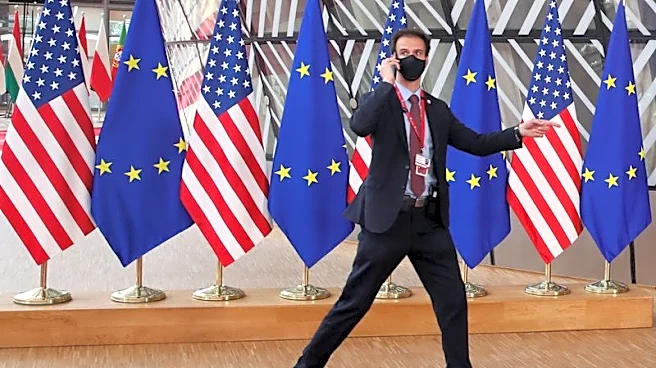
In April 2026, the European Union and the United States initiated a critical minerals partnership through a memorandum of understanding and an Action Plan. This strategic framework aims to reduce reliance on concentrated supply chains, particularly those
linked to China, and to coordinate policy across the entire minerals value chain. The agreement is not merely a trade gesture but a comprehensive approach linking industrial policy, supply-chain resilience, clean-energy manufacturing, and defense preparedness. The partnership covers the full supply chain, including exploration, extraction, processing, recycling, and substitution, with a focus on securing supply for strategic sectors such as batteries, electric vehicles, semiconductors, clean-energy systems, and defense technologies.
Why It's Important?
The partnership is significant as it addresses the geopolitical competition in critical mineral supply chains, where China holds a dominant position. By framing excessive dependence on a few suppliers as a strategic vulnerability, the agreement allows governments to deploy subsidies, stockpiling, and trade restrictions to ensure supply security. This initiative is crucial for transatlantic defense manufacturing, as it includes defense technologies among the sectors requiring secure mineral supply. The framework provides demand certainty and supplier qualification, encouraging defense firms to qualify alternate sources and redesign procurement. Additionally, the partnership aligns with NATO's focus on defense-critical raw materials and supply-chain resilience, reinforcing supply-security priorities.
What's Next?
The partnership aims to serve as a primary mechanism for coordinating trade policies toward a binding plurilateral agreement on critical minerals. This indicates a move beyond bilateral cooperation towards a larger strategic club of trusted suppliers and consumers. The United States is exploring related arrangements with countries like Japan and Mexico, with potential wider participation from Canada, Australia, and other resource-rich partners. The broader strategic effect would be a division of the global minerals economy into trusted and non-trusted networks, with the transatlantic initiative functioning as the nucleus of a standards-based club designed to reduce Chinese leverage.