
What's Happening?
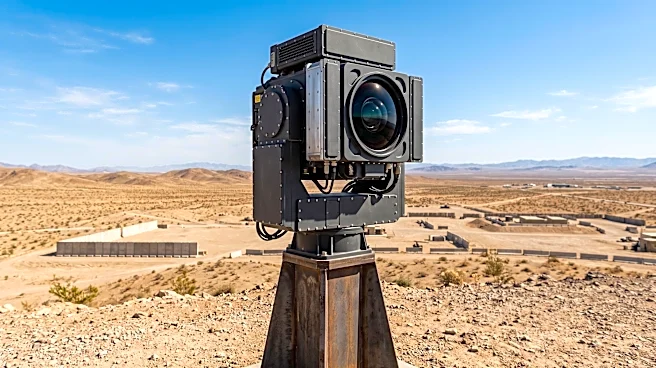
The Pentagon's Joint Task Force-Southern Border has reported over 300 drone defeats along the U.S.-Mexico border in 2026, with 11 attributed to the AMP-HEL laser system. Despite this, only two targets
have been publicly identified: Mylar party balloons and a U.S. Customs and Border Protection (CBP) drone. The CBP drone was reportedly destroyed on February 26 near Fort Hancock, Texas, after CBP had not informed the military of its flight. This incident, along with another on February 10 involving Mylar balloons near Fort Bliss, led to airspace closures and flight diversions. Representatives Rick Larsen, Bennie Thompson, and André Carson, leading Democrats on House transportation, homeland security, and aviation panels, criticized the administration in February for not addressing counter-drone coordination. Senator Tammy Duckworth requested an investigation into these incidents and the risks posed to civilian aircraft, but no public report has emerged. The FAA has since cleared military lasers for use in U.S. airspace after testing, but questions remain about target identification and inter-agency coordination.
Why It's Important?
The reported drone defeats highlight ongoing challenges in border security and airspace management. The lack of transparency regarding the 300 defeated drones, with only two publicly identified targets (one being a government drone and the other Mylar balloons), raises concerns about accountability and the criteria for engagement. The incident involving the CBP drone underscores critical communication and coordination gaps between federal agencies, potentially endangering personnel and civilian air traffic. The FAA's subsequent clearance for military lasers addresses safety concerns regarding the technology itself but does not resolve the fundamental issue of identifying and distinguishing between legitimate and illicit drone activity. This situation could lead to increased scrutiny from Congress, particularly from Democrats who have expressed frustration over the administration's handling of counter-drone coordination, potentially impacting future policy and funding for border security operations.
What's Next?
With Democrats gaining control of both chambers of Congress, the House Democrats who previously demanded answers regarding counter-drone coordination are expected to have subpoena power in January. This could lead to renewed investigations into the February incidents and a push for greater transparency and inter-agency coordination protocols. The FAA has implemented new NOTAMs banning civilian drones within one nautical mile of the border, requiring 48-hour notice and specific drone identification for permission to fly. This measure aims to enhance airspace control but places a burden on commercial and recreational drone operators. The ongoing deployment of counter-drone technology, such as the AMP-HEL laser, will likely continue, but its effectiveness and the criteria for its use will remain under scrutiny, especially given the ambiguity surrounding the '300 defeats' figure and the nature of the targets.
Beyond the Headlines
The 'border drone war' reveals a deeper issue of information asymmetry and the challenges of operating advanced military technology in a complex, multi-agency environment. The reliance on 'assessed to be associated with illicit activity' for drone engagements, without public disclosure of specific drone types or locations, creates a narrative where the 'shooter grades the shooter.' This lack of independent verification can erode public trust and fuel speculation, especially when the few publicly identified targets turn out to be innocuous items or government assets. The incidents also highlight the rapid evolution of drone technology and the corresponding need for equally sophisticated, yet transparent, counter-drone strategies that prioritize safety, inter-agency communication, and clear rules of engagement to prevent friendly fire incidents and ensure public accountability.