




What's Happening?
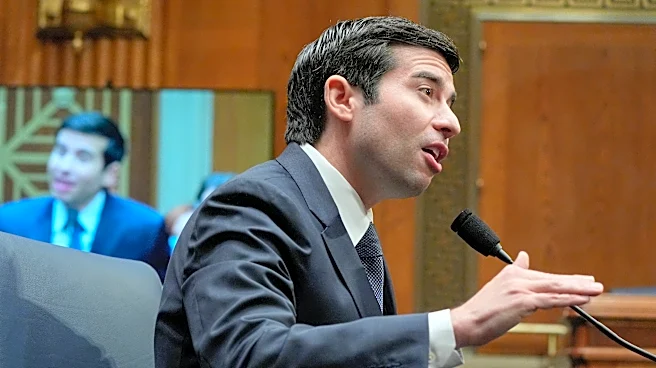
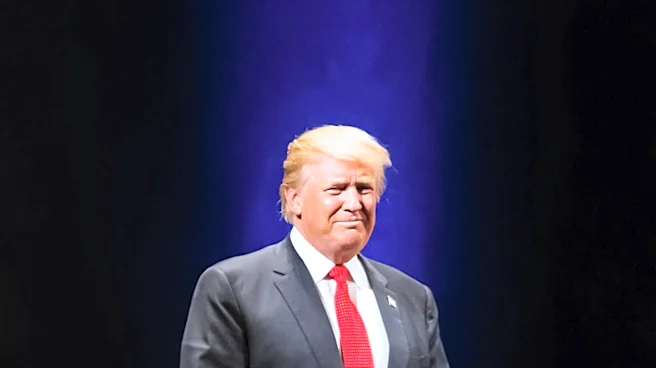
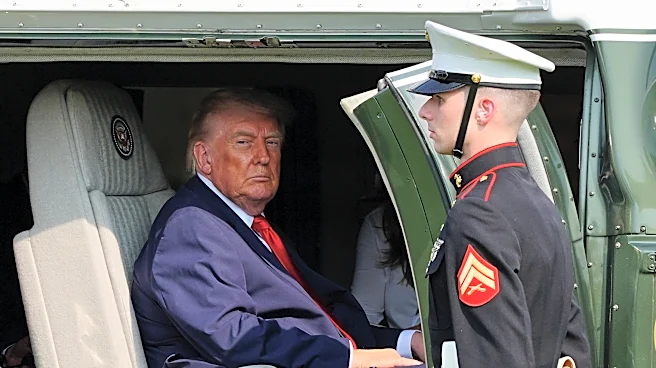
The Trump administration has been criticized for spending over $175,000 in taxpayer funds on large banners featuring President Trump's face on federal buildings in Washington, D.C. According to Democratic Senator Adam Schiff, this expenditure violates
federal laws against propaganda. The funds were allocated through contracts with Grafik Industries, Ltd., a Maryland-based firm, for banners on buildings such as the Departments of Agriculture, Labor, and Justice. Schiff highlighted two specific contracts: $39,000 for the Department of Interior and $114,020 for the Federal Aviation Administration. Critics argue that these banners are reminiscent of authoritarian regimes, while the administration defends them as part of America's 250th anniversary celebrations.
Why It's Important?
The use of taxpayer funds for what some perceive as self-aggrandizing propaganda raises significant ethical and legal questions. It highlights the ongoing debate over the appropriate use of public money and the boundaries of political expression by sitting presidents. The controversy also underscores tensions between the Trump administration and its critics, who view these actions as an overreach of executive power. The banners' presence on federal buildings could influence public perception of government neutrality and the separation of state and personal political promotion. This situation may impact future policies regarding government spending and the use of public spaces for political purposes.
What's Next?
The controversy may lead to increased scrutiny of government spending practices and potential legislative action to tighten regulations on the use of taxpayer funds for political purposes. The White House and involved agencies may face pressure to justify these expenditures and address concerns about legality and propriety. Additionally, the Freedom 250 initiative, which has been linked to these activities, may come under further investigation, especially regarding its fundraising practices and potential conflicts with the America 250 group. Public and political reactions could shape future commemorative projects and influence the administration's approach to public celebrations.
Beyond the Headlines
This development reflects broader cultural and political dynamics, including the personalization of political power and the use of state resources for personal branding. It raises questions about the role of political imagery in democratic societies and the potential for such practices to erode public trust in government institutions. The situation also highlights the intersection of politics and commerce, as corporations with government ties contribute to initiatives like Freedom 250. These dynamics may have long-term implications for how political figures engage with public and private sectors to advance their agendas.