





What's Happening?
Twelve European Union countries, including Finland, Denmark, and Germany, issued a joint declaration following a two-day European Arctic Summit hosted by Finland. The declaration expressed serious concern over the significant and long-term threat Russia
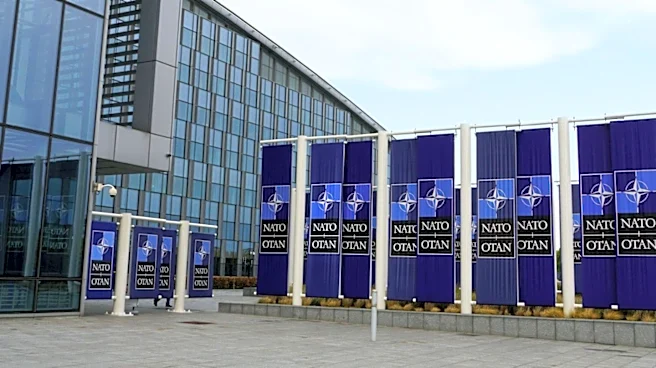
poses to Euro-Atlantic security. The participating nations highlighted Russia’s ambitions to increase its influence in the Arctic, coupled with its hostile actions towards Europe, including hybrid activities. These factors underscore the necessity for the EU to strengthen its Arctic policy. The summit also addressed the impact of Russia’s war in Ukraine, China’s growing security interests in the region, and the accelerating effects of climate change, all of which are reshaping the Arctic landscape. The countries emphasized the need for the EU to adopt a more proactive role in response to these developments, advocating for closer coordination between the EU and NATO, and investment in critical minerals and space technology, such as satellites.
Why It's Important?
This declaration from the European Arctic Summit is important for the U.S. as it directly impacts Euro-Atlantic security, a key area of U.S. foreign policy and defense strategy. The U.S. has significant strategic interests in the Arctic, including military presence and resource considerations. The concerns raised about Russia's increasing influence and hostile activities in the region directly align with U.S. national security interests, particularly regarding potential threats to NATO allies and the stability of the Arctic. The call for greater EU-NATO coordination reflects a shared understanding of the evolving geopolitical landscape and the need for a unified front against perceived threats. Furthermore, the discussion on climate change's impact on the Arctic and the opening of new maritime routes has implications for global trade and military mobility, areas where the U.S. has substantial stakes. The emphasis on critical minerals and space technology also points to broader economic and technological competition that involves U.S. interests.
What's Next?
The European Arctic Summit declaration precedes an updated EU Arctic policy, which is expected to be released later this fall. This upcoming policy will likely outline concrete steps and strategies to address the concerns raised during the summit, including strengthening the EU's role in Arctic security and cooperation. Discussions around jointly procuring and owning icebreakers suggest potential future investments in Arctic infrastructure and capabilities, which could involve international partnerships. Increased coordination between the EU and NATO is anticipated, potentially leading to joint exercises, intelligence sharing, and a more cohesive defense posture in the High North. The focus on critical minerals and space technology indicates a push for greater European self-reliance and technological advancement in strategic sectors, which could influence global supply chains and technological competition. The U.S. will likely monitor these developments closely, as they will shape the future security and economic landscape of the Arctic region.
Beyond the Headlines
Beyond the immediate security concerns, the summit's discussions highlight the complex interplay of geopolitics, climate change, and economic interests in the Arctic. The melting of Arctic ice, while a climate crisis, also opens new shipping lanes, creating both economic opportunities and strategic vulnerabilities. This dual nature of climate change impacts adds another layer of complexity to international relations in the region. The emphasis on critical minerals points to the broader global competition for resources essential for modern technologies, linking Arctic policy to industrial and technological independence. The call for greater EU-NATO coordination also underscores the evolving nature of alliances and the need for adaptability in the face of new threats. This situation could lead to a re-evaluation of existing international agreements and a push for new frameworks to manage the Arctic's future, with significant implications for global environmental policy, resource management, and international security dynamics.