



What's Happening?
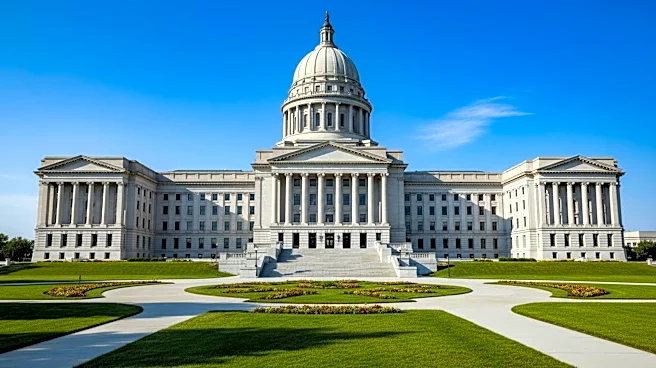
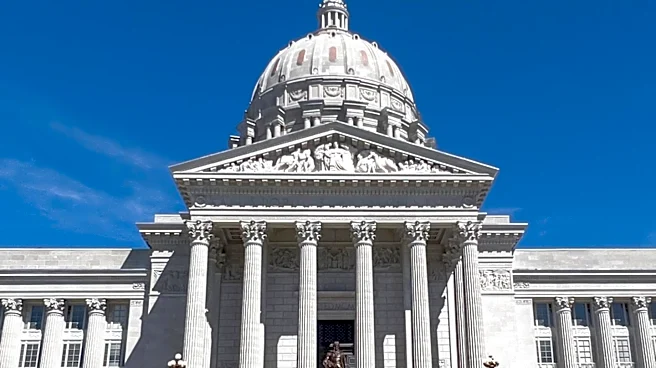
A Missouri judge has ruled that new U.S. House districts, supported by President Trump, will be used in the upcoming November elections. Cole County Circuit Judge Daniel Green rejected a petition to put these Republican-friendly districts to a statewide
vote. This decision marks a victory for Republicans aiming to maintain their slim majority in the U.S. House. The state's mid-decade redistricting efforts have been highly contested, leading to approximately a dozen lawsuits over the past year. Missouri was the second state, following Texas, to act on President Trump's call to redraw congressional districts. The new map is specifically designed to benefit Republicans, particularly by reshaping the 5th Congressional District to challenge Democratic U.S. Rep. Emanuel Cleaver. The map reassigns parts of Kansas City to Republican-held districts and extends Cleaver's district into rural, Republican-heavy areas, making about 59% of its voters new to the district. The Missouri Constitution does not explicitly permit or forbid a referendum on congressional redistricting, which led to the court's involvement.
Why It's Important?
This ruling is significant for the balance of power in the U.S. House of Representatives, as it allows a Republican-favored map to proceed in a crucial election year. Republicans nationally are hoping to gain as many as 16 additional seats from new House maps enacted in eight states, including Missouri. Conversely, Democrats anticipate winning up to six additional seats from new districts in California and Utah. The decision in Missouri could directly impact the composition of the House, potentially solidifying Republican control. The legal battle over redistricting highlights the intense partisan struggle to shape electoral outcomes through district boundaries. The case also underscores the ongoing debate about the role of referendums in legislative processes, particularly when constitutional language is ambiguous. The outcome in Missouri could set a precedent for how similar redistricting challenges are handled in other states, influencing future electoral landscapes and the power dynamics between state legislatures and citizen-led initiatives.
What's Next?
The case is highly likely to be appealed to the Missouri Supreme Court, as opponents of the redistricting plan, including Richard von Glahn, executive director of People Not Politicians, have already announced their intention to do so. The Missouri Supreme Court has set September 2 for arguments in appeals of ballot measure cases, including the referendum on the state’s congressional map. A ruling from the Supreme Court must be issued by September 8, which is the final day for courts to add questions to the November 3 ballot. If the Supreme Court upholds the lower court's decision, the Trump-backed congressional map will be used in the November elections. If the Supreme Court overturns the decision, it could potentially lead to a statewide referendum on the map or require further adjustments to the district boundaries, creating uncertainty for the upcoming election. The outcome will determine the final electoral framework for Missouri's U.S. House races.
Beyond the Headlines
The Missouri redistricting controversy reflects a broader national trend where political parties leverage redistricting to gain electoral advantages, often leading to protracted legal battles. The involvement of President Trump in urging Republican-led states to redraw boundaries underscores the nationalization of these local processes and their strategic importance in federal elections. The debate over whether congressional redistricting should be subject to a statewide referendum touches upon fundamental questions of democratic representation and the balance of power between elected legislatures and direct citizen participation. The ambiguity in the Missouri Constitution regarding referendums on redistricting highlights a potential gap in legal frameworks that could be exploited for partisan gain. This situation also raises ethical considerations about gerrymandering and its impact on fair representation, potentially leading to districts that are less competitive and more polarized, ultimately affecting voter engagement and trust in the electoral system.