
What's Happening?
NASA's Space Launch System (SLS) rocket is set to launch the Artemis II mission to the Moon, carrying four CubeSats, or small satellites, as secondary payloads. These CubeSats are provided by countries
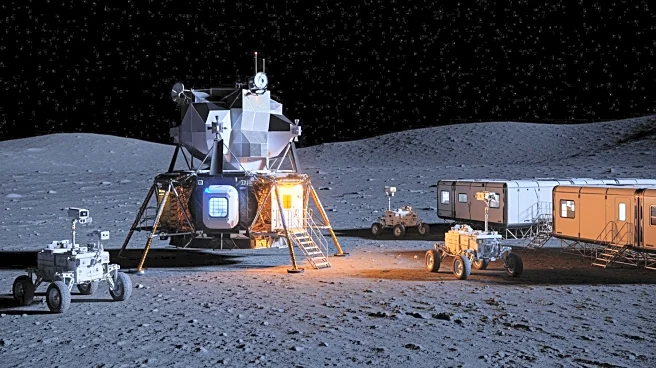
that are signatories of the Artemis Accords, highlighting international collaboration in space exploration. The CubeSats will be deployed from the rocket's Orion stage adapter approximately five hours after launch, with deployment controlled by the avionics unit. This mission marks a significant step in NASA's Artemis program, which aims to return humans to the Moon and establish a sustainable presence.
Why It's Important?
The inclusion of international CubeSats in the Artemis II mission underscores the global nature of modern space exploration and the importance of international partnerships. By involving countries that are part of the Artemis Accords, NASA is fostering collaboration and sharing the benefits of space exploration. This mission not only advances the Artemis program's goals but also strengthens diplomatic ties and technological exchange among participating nations. The successful deployment of these CubeSats could pave the way for future international collaborations in space missions, enhancing scientific research and innovation.
What's Next?
Following the launch of Artemis II, NASA will continue to prepare for subsequent Artemis missions, including the goal of landing the first woman and the next man on the Moon. The success of the CubeSat deployments will be closely monitored, providing valuable data and insights for future missions. As the Artemis program progresses, NASA and its international partners will work towards establishing a sustainable human presence on the Moon, which could serve as a stepping stone for future missions to Mars and beyond.