




What's Happening?
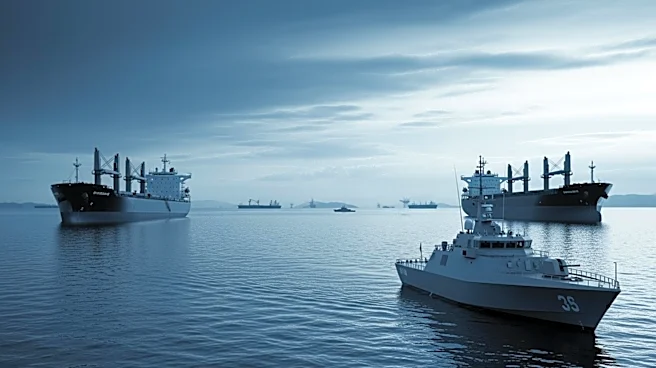
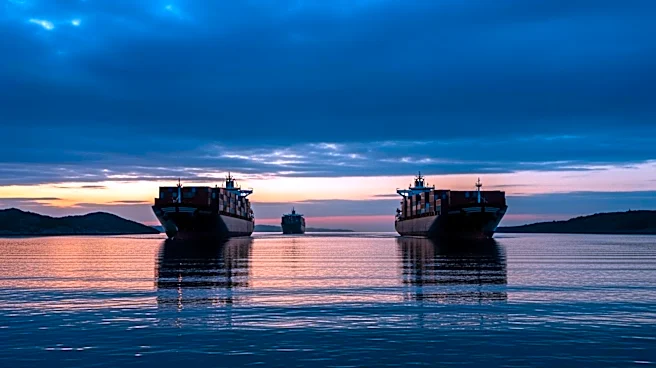
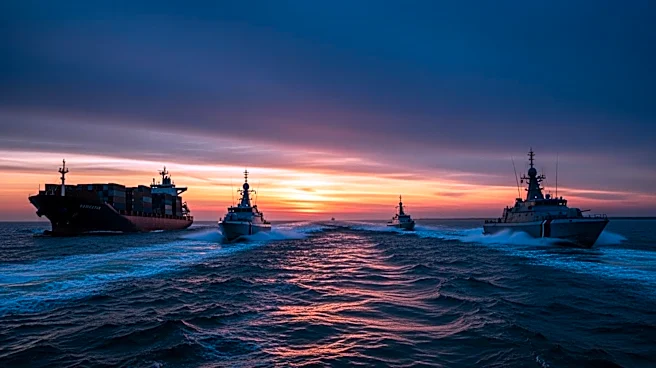
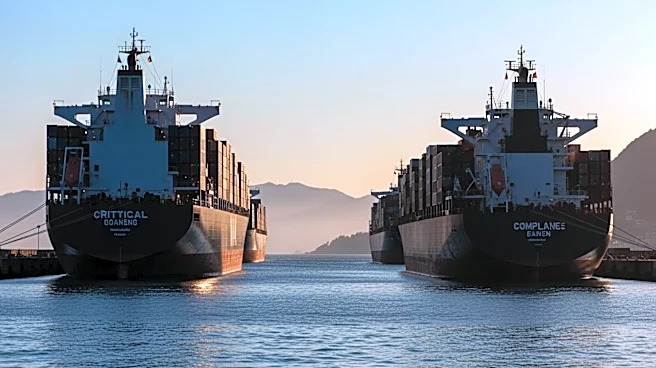
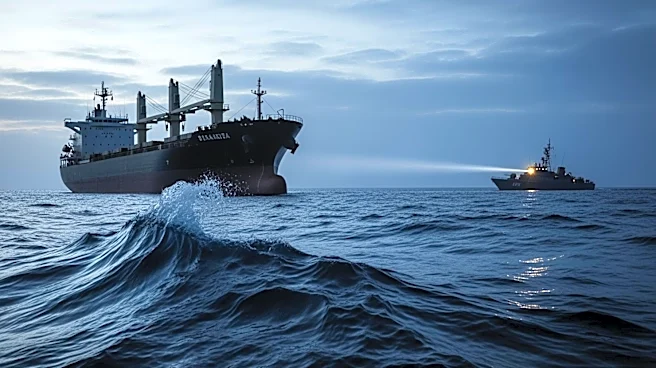
Iran has utilized swarms of fast boats to seize two container ships near the Strait of Hormuz, highlighting the ongoing maritime threats in the region. Despite U.S. claims of having largely destroyed Iran's conventional navy, these fast-attack vessels
remain a significant threat. The boats, operated by Iran's Revolutionary Guards, are equipped with heavy machine guns, rocket launchers, and anti-ship missiles. This tactic forms part of a broader strategy involving shore-based missiles, drones, and electronic interference to disrupt shipping routes. The recent seizures follow a U.S. blockade on Iran's maritime trade and the interception of Iran-linked oil tankers.
Why It's Important?
The seizure of container ships by Iranian fast boats underscores the persistent security challenges in the Strait of Hormuz, a critical chokepoint for global oil and gas supplies. This development could lead to increased shipping disruptions and elevated insurance costs, impacting global trade and energy markets. The use of asymmetric tactics by Iran highlights the limitations of conventional military strategies in addressing non-traditional threats. As tensions in the region continue, the international community may need to reassess its approach to ensuring maritime security and protecting vital shipping lanes.
What's Next?
The international shipping industry faces heightened risks as Iran continues to employ fast boats in its naval strategy. Stakeholders may need to enhance security measures and develop contingency plans to mitigate potential disruptions. The U.S. and its allies could consider diplomatic or military responses to address the threat posed by Iran's unconventional tactics. Ongoing tensions in the region may also prompt discussions on broader geopolitical strategies to ensure the stability of global energy supplies and maintain open shipping routes.