





What's Happening?
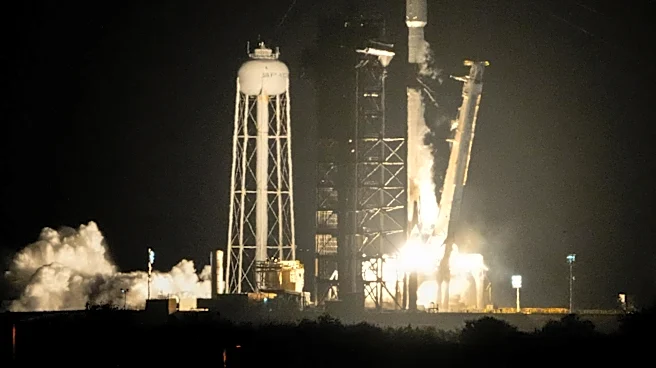
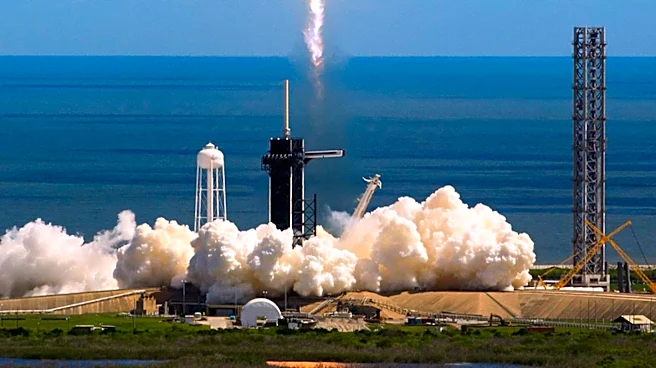
An abandoned upper stage of a SpaceX Falcon 9 rocket crashed into the moon, impacting the Einstein Crater. The rocket, launched with NASA and Firefly Aerospace's Blue Ghost lunar lander, had been drifting in space for 18 months before the crash. NASA and other
space agencies had prepared to observe the impact, which is expected to create a crater approximately 60 feet wide and 12 feet deep. The crash has reignited discussions about space debris management, as the moon's surface is frequently impacted by meteorites and human-made objects.
Why It's Important?
The incident highlights the growing issue of space debris and its potential implications for future lunar missions. With an increasing number of space launches, the accumulation of space junk poses risks to both current and planned missions, including NASA's lunar base projects. The crash underscores the need for improved regulations and strategies to manage space debris, ensuring safe and sustainable space exploration. The event also serves as a reminder of the challenges associated with space exploration and the importance of responsible space operations.
Beyond the Headlines
The crash of the SpaceX rocket stage into the moon raises ethical and regulatory questions about space exploration. As space becomes more accessible, the responsibility to manage debris and minimize environmental impact becomes crucial. The incident may prompt international discussions on space governance and the development of comprehensive policies to address space debris, balancing exploration with environmental stewardship.