







What's Happening?
As of January 1, 2026, the federal Section 25D residential clean energy credit, which provided a 30 percent tax credit for homeowners installing solar panels and batteries, is no longer applicable to new systems. This change significantly alters the financial
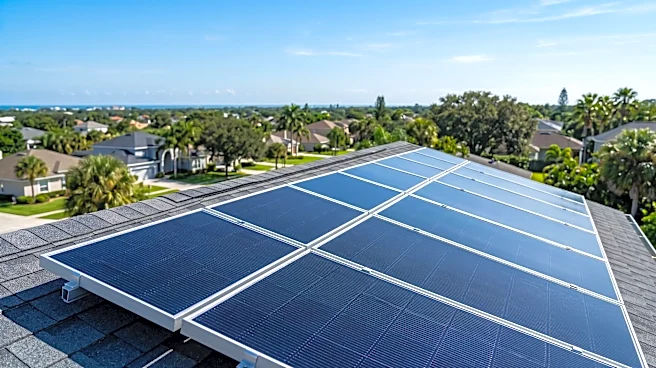
landscape for residential solar installations in Florida. While the federal credit has expired for homeowners, commercial and third-party-owned systems continue to be eligible for incentives under Section 48E. Florida still offers several state-specific incentives, including a state sales tax exemption on solar equipment, which removes the 6 percent state sales tax at the point of sale. Additionally, the property tax exclusion for residential renewable energy devices remains in effect, preventing an increase in assessed property value due to solar installations. Full-retail net metering with investor-owned utilities like FPL, Duke Energy Florida, and TECO also continues, allowing homeowners to receive credits for excess solar energy fed back into the grid. Utility-specific programs are limited and subject to frequent changes, often focusing on batteries or efficiency measures rather than direct panel rebates. PACE financing is also available in participating Florida counties.
Why It's Important?
The discontinuation of the federal residential solar tax credit marks a pivotal shift in the economic viability of solar energy for Florida homeowners. Previously, the 30 percent federal credit was a major financial incentive, making solar installations more accessible and reducing payback periods. Without this credit, the decision to install solar will rely more heavily on Florida's abundant sunshine, rising electricity rates, and the benefits of net metering. This change may lead to a re-evaluation of system sizing, with a greater emphasis on matching solar production to actual household consumption rather than oversizing to maximize tax credits. The continued state incentives, particularly the sales tax exemption and property tax exclusion, become more critical in maintaining the financial attractiveness of solar. The impact on the solar industry in Florida could include a slowdown in residential installations or a shift in market strategies as companies adapt to the new incentive structure. Homeowners will need to carefully assess the long-term savings from reduced electricity bills against the upfront costs without the substantial federal subsidy.
What's Next?
Homeowners in Florida considering solar installations in 2026 and beyond will need to adjust their financial expectations, as proposals that still include the 30 percent federal credit will be inaccurate. The focus for potential solar adopters will shift towards understanding the value derived from offsetting electricity bills through net metering and the savings from state tax exemptions. Solar installers will likely need to refine their sales pitches and financial modeling to reflect the absence of the federal credit, emphasizing the long-term savings from energy independence and protection against rising utility rates. The role of utility programs, though limited and variable, may gain more prominence as homeowners seek any available financial assistance. Furthermore, the importance of accurate system sizing, based on actual energy consumption, will increase to ensure optimal return on investment without the federal incentive. The solar market in Florida will likely see an emphasis on efficiency and cost-effectiveness, potentially driving innovation in installation methods and equipment to maintain competitiveness.
Beyond the Headlines
The expiration of the federal solar tax credit for residential systems in Florida could have broader implications for the state's renewable energy goals and the decentralization of its energy grid. While Florida has strong natural advantages for solar power, the removal of a significant federal incentive might slow the pace of residential solar adoption, potentially impacting the state's overall contribution to national renewable energy targets. This shift also highlights the increasing importance of state-level policies and utility regulations in driving renewable energy growth. The continued availability of full-retail net metering in Florida's investor-owned utility territories remains a critical policy for supporting residential solar, underscoring the ongoing debate about net metering policies nationwide. The change could also spur greater interest in energy efficiency measures and battery storage solutions, as homeowners look for alternative ways to maximize their energy savings and resilience in the absence of the federal tax credit. This scenario underscores the dynamic interplay between federal, state, and utility-level incentives in shaping the future of renewable energy adoption.