



What's Happening?
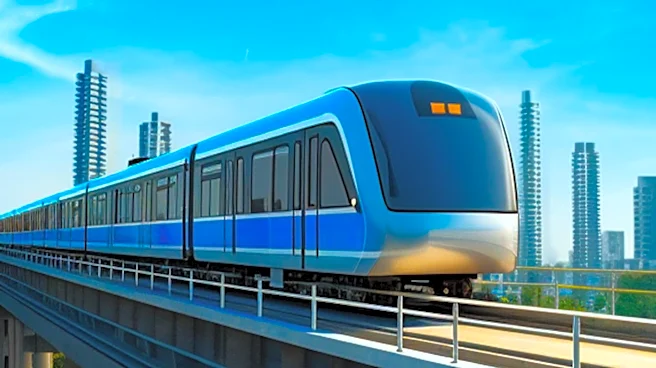
A subcommittee of the Honolulu Authority for Rapid Transportation (HART) has tentatively endorsed a plan to extend the Skyline rail system, potentially adding up to $4.8 billion to the project's cost. The proposal suggests extending the rail line eastward
to Ala Moana Center and westward to central Kapolei, near the Ka Makana Aliʻi shopping center. Honolulu Mayor Rick Blangiardi has already expressed support for these extensions, as has the state Office of Planning and Sustainable Development. The report, which will be officially received by the HART board, outlines potential financing methods, with the most prominent being an extension of Honolulu’s half-percent excise tax surcharge, currently set to expire at the end of 2030. This surcharge generates approximately $360 million annually and funds most of the existing $10 billion, 18.9-mile rail line. The current rail project, which began construction in 2011, has faced significant delays and cost overruns, with the full line not expected to open until 2032, a dozen years behind its original schedule.
Why It's Important?
This proposed extension represents a significant financial and logistical undertaking for Honolulu, potentially adding billions to an already over-budget and delayed rail project. The decision to extend the rail line could have profound implications for urban development, public transportation, and the local economy. Extending the rail to key commercial and residential hubs like Ala Moana and Kapolei aims to maximize ridership and improve connectivity, potentially reducing traffic congestion and supporting economic growth in these areas. However, it also raises concerns about the financial burden on taxpayers, especially if the excise tax surcharge is extended. The project's history of cost overruns and delays adds a layer of complexity and public scrutiny to this new proposal. The involvement of state and city officials, along with developers and shopping mall operators, highlights the broad stakeholder interest and the potential for both significant benefits and substantial challenges in realizing these extensions.
What's Next?
The HART board is scheduled to officially receive the subcommittee's report on the proposed rail extensions. Following this, a feasibility study will be conducted for a 1.2-mile extension to Ala Moana, including two new stations, and an additional mile in Kapolei with one new station. The estimated costs for these segments are $2.2 billion to $2.5 billion for Ala Moana and $2 billion to $2.3 billion for Kapolei. A critical next step will involve discussions with the state Legislature regarding the potential extension of Honolulu's half-percent excise tax surcharge, which would be necessary to finance these additions. The Legislature's decision, particularly given past controversies and changes in political leadership, will be pivotal. If the feasibility study concludes that the extensions are viable, HART plans to proceed with design, planning, and construction. The public and various stakeholders will closely monitor these developments, especially concerning financing and project timelines.
Beyond the Headlines
The discussion around extending the Honolulu rail line delves into more than just infrastructure development; it touches upon the long-term vision for urban planning and sustainability in Hawaii. The initial rail project has been a contentious issue, symbolizing the challenges of large-scale public works in a unique island environment. The proposed extensions, while aiming to enhance connectivity and ridership, also reflect a deeper commitment to a transit-oriented development model, potentially reshaping residential and commercial patterns in Honolulu. The debate over financing, particularly the extension of the excise tax surcharge, highlights the ongoing tension between public investment in infrastructure and the burden on taxpayers. Furthermore, the project's history of delays and cost overruns raises questions about governance, accountability, and the effectiveness of public-private partnerships in complex urban projects. The outcome of this proposal will not only impact daily commutes but also set a precedent for future infrastructure initiatives and the broader economic and social development trajectory of Oahu.