








What's Happening?
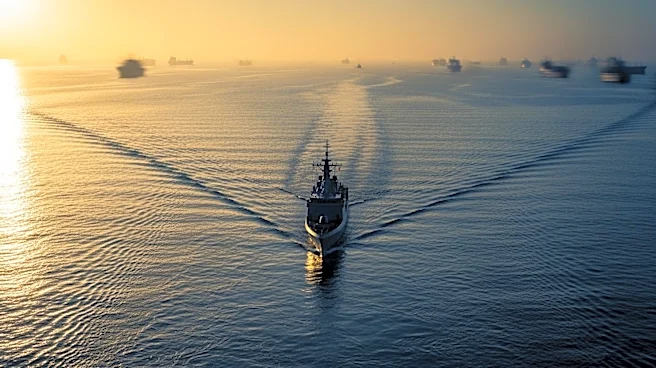
Commercial shipping through the Strait of Hormuz is gradually resuming despite conflicting guidance from U.S. and Iranian authorities on the safest routes. According to maritime experts, a significant portion of the traffic is operating 'dark,' with ships
turning off radar and communication systems to avoid detection and potential targeting. The U.S. Central Command advises using the southern corridor in Omani waters, while Iran's Persian Gulf Strait Authority recommends the northern route under Iranian control. This situation has created uncertainty among shipowners, who must choose between potential interference from Iranian forces or following U.S. and insurer guidance.
Why It's Important?
The Strait of Hormuz is a critical chokepoint for global oil shipments, and disruptions in this area can have significant implications for international energy markets. The conflicting guidance from U.S. and Iranian authorities highlights the geopolitical tensions in the region, which could affect global shipping routes and insurance costs. The resumption of shipping, albeit cautiously, indicates a tentative easing of tensions, but the risk of escalation remains. The situation underscores the strategic importance of the Strait of Hormuz and the need for clear navigation protocols to ensure the safety of commercial vessels.
What's Next?
Shipowners will need to navigate the complex geopolitical landscape carefully, balancing the risks of following U.S. or Iranian guidance. The U.S. Treasury's 60-day waiver for Iran to sell crude oil may lead to increased Iranian exports, potentially affecting global oil prices. As the situation evolves, international stakeholders, including shipping companies and insurers, will likely continue to monitor developments closely. The potential for further diplomatic negotiations or military actions in the region could influence future shipping operations and security measures in the Strait of Hormuz.