







What's Happening?
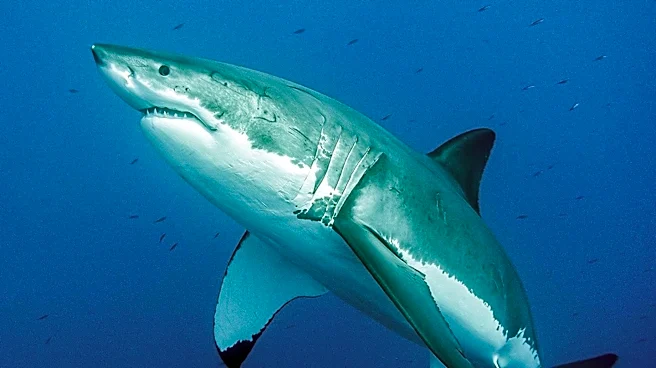
A significant increase in shark sightings along the U.S. and Canadian coasts has been observed, with the largest tagged male great white shark, named Contender, being tracked as he migrates northward. Contender, a nearly 14-foot-long shark weighing over
1,650 pounds, was last located off Nova Scotia, Canada. This surge in sightings, particularly in areas like New York and California, is attributed to rising ocean temperatures caused by climate change. These warmer waters are altering the migratory patterns of sharks, bringing them closer to human-populated coastal areas. Researchers emphasize that while the likelihood of shark attacks remains low, the changing ocean conditions are a clear indicator of the broader impacts of climate change on marine ecosystems.
Why It's Important?
The movement of sharks into new territories due to warming oceans underscores the broader environmental challenges posed by climate change. As ocean temperatures rise, the distribution of marine species is shifting, potentially increasing human-shark interactions. This phenomenon serves as a tangible example of how climate change is affecting biodiversity and ecosystem dynamics. The presence of sharks in new areas can also impact local economies, particularly those reliant on tourism and fishing. Additionally, the situation highlights the need for increased awareness and conservation efforts to protect marine life and maintain ecological balance.
What's Next?
As ocean temperatures continue to rise, it is expected that more marine species will alter their migratory patterns, potentially leading to increased interactions with humans. Researchers and conservationists may need to implement new strategies to monitor and manage these changes, ensuring both human safety and the protection of marine ecosystems. Public education campaigns could be essential in promoting safe practices for beachgoers and fostering a better understanding of the role sharks play in the ocean's health. Policymakers might also consider strengthening regulations to mitigate climate change impacts and support marine conservation efforts.
Beyond the Headlines
The shifting patterns of shark movements due to climate change highlight the interconnectedness of global ecosystems. As apex predators, sharks play a crucial role in maintaining the health of marine environments. Their movement into new areas could disrupt existing food webs, leading to unforeseen ecological consequences. This situation also raises ethical considerations regarding human responsibility in addressing climate change and its effects on wildlife. The need for sustainable practices and policies becomes more pressing as the impacts of climate change become increasingly visible in various aspects of the natural world.