






What's Happening?
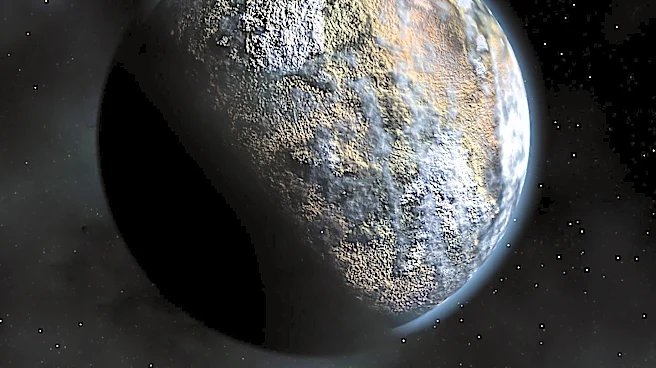
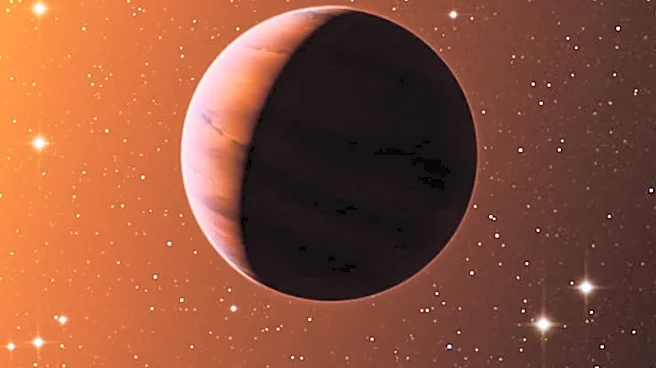
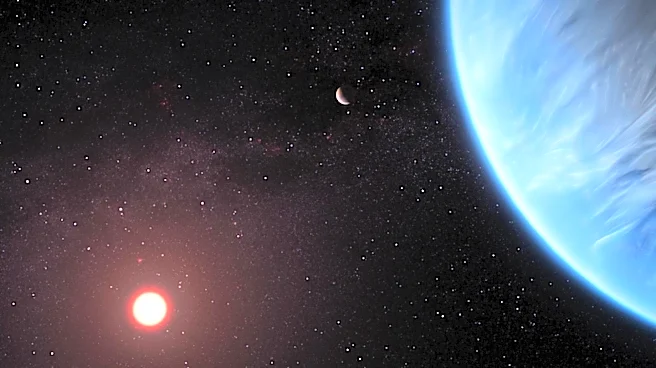
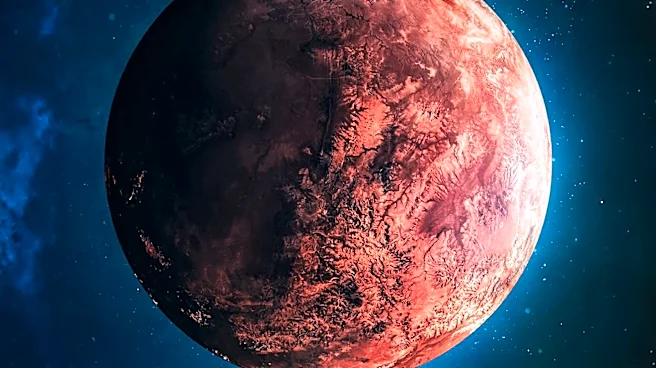
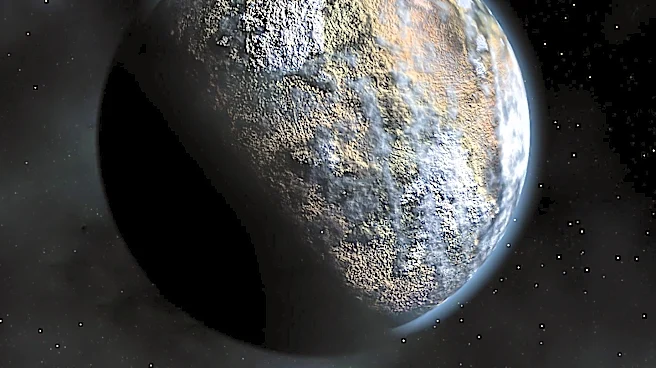
Researchers have identified the first atmosphere surrounding an Earth-like, rocky planet, LHS 1140b, which is located within the habitable zone of a distant star. This discovery marks a significant milestone in the search for extraterrestrial life, as
it provides strong evidence that planets with conditions similar to Earth could exist beyond our solar system. The atmosphere of LHS 1140b, which lies 48 light years away in a red star system, contains helium, although other gases that could support life may also be present. Dr. Collin Cherubim of Harvard University emphasized the importance of this finding, noting that it is the first time an atmosphere has been detected on a rocky planet in the habitable zone of another star.
Why It's Important?
The discovery of an atmosphere on LHS 1140b is crucial as it brings scientists closer to understanding the potential for life beyond Earth. While the presence of helium alone does not support life, the possibility of other gases existing in the planet's atmosphere opens up new avenues for research. This finding is a step towards answering fundamental questions about the existence of life elsewhere in the universe. The research highlights the importance of studying planets within the 'Goldilocks zone,' where conditions are just right for liquid water to exist, a key ingredient for life as we know it. The discovery also underscores the capabilities of modern astronomical tools and techniques in exploring distant worlds.
What's Next?
Future research will likely focus on further analyzing the atmosphere of LHS 1140b to identify other gases that may be present. This could involve using advanced telescopes and instruments to gather more detailed data. Additionally, other planets in similar habitable zones, such as those in the TRAPPIST-1 system, will continue to be scrutinized for signs of atmospheres and potential life-supporting conditions. The ongoing development of space telescopes and observational technology will play a critical role in these efforts, potentially leading to more groundbreaking discoveries in the field of exoplanetary science.
Beyond the Headlines
The discovery of an atmosphere on LHS 1140b raises important questions about the conditions necessary for life and the potential diversity of life forms that could exist in the universe. It also prompts ethical and philosophical considerations about humanity's place in the cosmos and the implications of finding life beyond Earth. As research progresses, scientists and policymakers may need to address the potential consequences of such discoveries, including the impact on scientific priorities and international collaboration in space exploration.