









What's Happening?
The government is implementing a series of initiatives to transform agriculture into a technology-driven, profitable, and sustainable sector. Prime Minister Tarique Rahman announced that the government is focusing on expanding digital agriculture, bringing
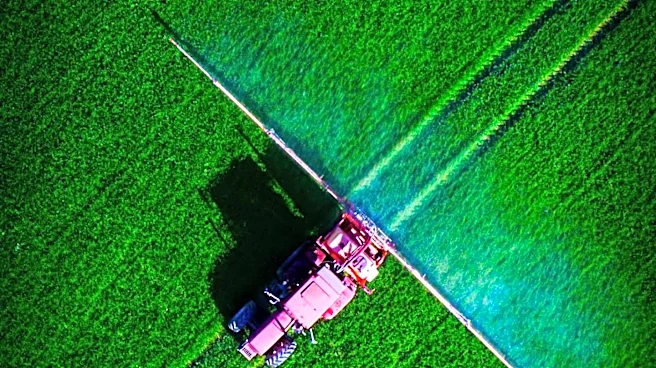
nearly 27.5 million farmers onto a unified digital platform, and promoting smart farming technologies. These efforts include the introduction of a nationwide Farmer Card program to build a comprehensive digital database of farmers, ensuring direct delivery of government services. The government is also expanding agricultural mechanization to reduce production costs, address labor shortages, and improve farm profitability. Advanced technologies such as remote sensing, AI, IoT, drones, GPS, satellite data, and big data are being promoted to enable more effective crop monitoring, early disease detection, precision fertilizer application, efficient irrigation management, and better production planning.
Why It's Important?
These initiatives are significant as they aim to modernize the agricultural sector, making it more competitive and sustainable. By leveraging technology, the government seeks to address challenges such as labor shortages and high production costs, which have traditionally hindered agricultural productivity. The move towards a digital and mechanized agricultural framework is expected to enhance efficiency, reduce environmental impact, and increase profitability for farmers. This transformation is crucial for ensuring food security and adapting to climate change, as it promotes climate-resilient agriculture. The integration of technology in agriculture could also serve as a model for other sectors, driving broader economic growth and innovation.
What's Next?
The government plans to continue expanding its digital agriculture initiatives, with a focus on integrating more farmers into the digital platform and enhancing the use of smart farming technologies. Future steps may include further development of the Farmer Card program and increased investment in research and innovation to support sustainable agricultural practices. Stakeholders such as farmers, technology providers, and policymakers are expected to collaborate to ensure the successful implementation of these initiatives. Monitoring and evaluation mechanisms will likely be established to assess the impact of these programs and make necessary adjustments.