








What's Happening?
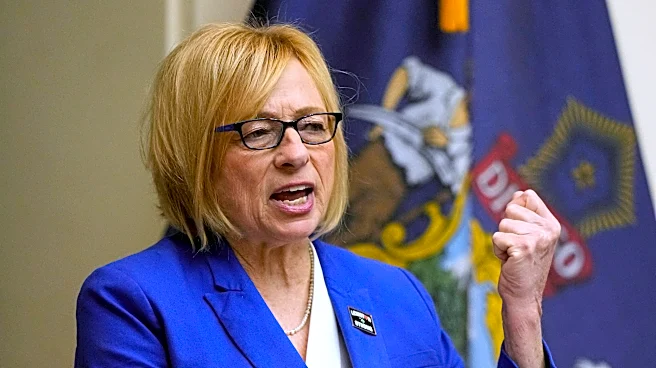
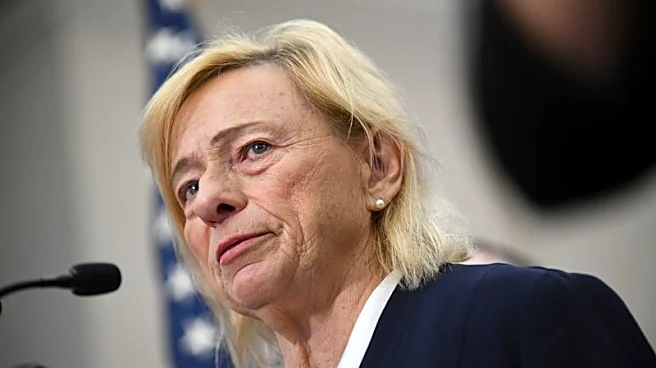
Maine Governor Janet Mills has announced her withdrawal from the Senate race against incumbent Republican Senator Susan Collins, citing insufficient campaign funds as the primary reason. Mills, a two-term governor and former prosecutor, was initially
the Democratic establishment's preferred candidate. However, she struggled to gain traction against Graham Platner, a 41-year-old oyster farmer and political newcomer who has garnered significant support with his progressive platform. Mills' decision to exit the race clears the path for Platner to become the Democratic nominee in the upcoming general election.
Why It's Important?
Mills' withdrawal from the Senate race is a significant development in the political landscape of Maine and the broader Democratic strategy to regain control of the Senate. Her exit highlights the challenges faced by traditional candidates in securing financial backing and voter enthusiasm in an increasingly polarized political environment. Platner's rise reflects a shift towards more progressive candidates within the Democratic Party, potentially reshaping the party's approach to key issues. The race against Collins is critical for Democrats, as winning the seat could be pivotal in their efforts to reclaim a Senate majority.
What's Next?
With Mills out of the race, Graham Platner is poised to face Susan Collins in the general election. The campaign is expected to be highly competitive, with both parties likely to invest heavily in the race. Democrats will focus on uniting behind Platner to maximize their chances of unseating Collins, while Republicans will aim to capitalize on Platner's controversies to bolster Collins' re-election bid. The outcome of this race could influence the balance of power in the Senate and shape legislative priorities in the coming years.