
What's Happening?
Utah State University President Brad Mortensen has officially named Justen Smith as the vice president of USU Extension, following a comprehensive nationwide search. Smith has been serving as the interim
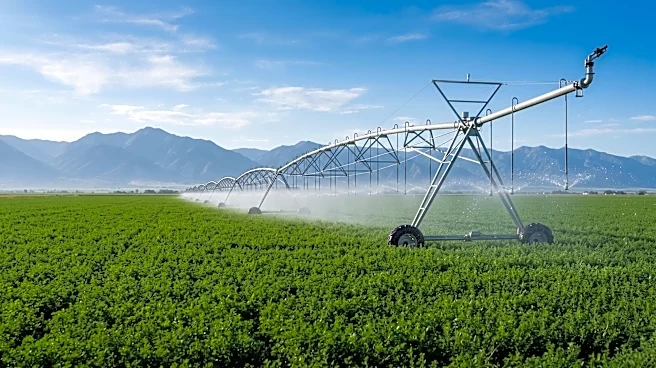
vice president since March and brings 27 years of experience as an extension professional. Before his interim role, he led the USU Extension Agriculture and Natural Resources Department for nine years. Throughout his career, Smith has been instrumental in securing over $11 million in grants and external funding for Extension initiatives and agricultural development. Notably, he spearheaded the creation of a website dedicated to agricultural water optimization and conservation for Utah, which is the second-driest state. He also collaborated with Davis County commissioners to establish the Davis Agricultural Heritage Center in Kaysville, a facility that hosts various events, including 4-H youth livestock and horse shows. Smith's work extends internationally, having provided technical assistance to farmers and agricultural organizations in 24 countries across Africa, the Middle East, and Latin America, focusing on improving livestock production, enhancing food security, and developing sustainable agricultural practices.
Why It's Important?
The appointment of Justen Smith as Vice President of USU Extension is significant for Utah, particularly given the state's environmental and economic challenges. His extensive experience in water conservation and agricultural development is crucial for a state facing severe drought conditions. The initiatives he has led, such as the agricultural water optimization website and the Davis Agricultural Heritage Center, directly address critical needs in resource management and community engagement. USU Extension, under Smith's leadership, is positioned to continue providing research-based education and assistance in vital areas like agriculture, natural resources, food preservation, mental health, and rural economic development. This leadership ensures that the university's resources are effectively disseminated to Utahns, offering practical solutions to pressing issues and contributing to the state's resilience and prosperity. The focus on measurable impacts and economic return on investment highlights the practical benefits of Extension programs for the state's residents and economy.
What's Next?
Under Justen Smith's leadership, USU Extension is expected to continue its mission of connecting university expertise with the needs of communities across Utah. Smith has expressed a goal to increase awareness and understanding of Extension programs, ensuring more Utahns can benefit from its diverse offerings. This will likely involve further development of resources for water conservation and agricultural practices, as well as continued support for youth development through programs like 4-H. The organization will also likely strengthen its partnerships with elected officials, industry leaders, academic colleagues, and local communities to address Utah's most pressing challenges. His international experience suggests a potential for incorporating global best practices into local initiatives, further solidifying USU Extension's role as a national model for land-grant universities.
Beyond the Headlines
Smith's appointment underscores the evolving role of land-grant universities in addressing contemporary societal challenges. Beyond traditional agricultural support, USU Extension's mandate now explicitly includes mental health, financial literacy, and food insecurity, reflecting a broader understanding of community well-being. The emphasis on water conservation in Utah, a state grappling with extreme aridity, highlights the critical intersection of environmental science, public policy, and community education. Smith's international work also suggests a global perspective on local issues, potentially fostering innovative solutions by drawing on diverse experiences. This holistic approach to extension services positions USU as a vital resource not just for agricultural advancement but for comprehensive community resilience and sustainable development in the face of complex environmental and social pressures.