



What's Happening?
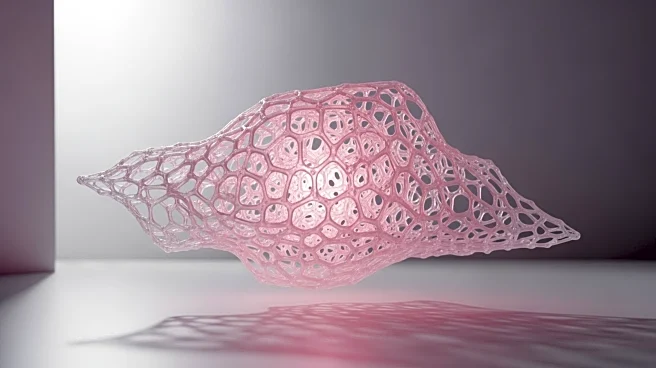
Katie Weimer, a biomechanical engineer from Colorado, is pioneering a new approach to breast reconstruction for cancer survivors using 3D-printed biotissue. Inspired by her mother's battle with breast cancer, Weimer founded GenesisTissue in 2024 to develop
breast-tissue scaffolds made from bioprintable materials. These scaffolds are designed to integrate with a patient's own fat cells, promoting natural tissue growth and eliminating the need for traditional implants, which carry risks of rejection and cancer. The technology aims to provide a more natural and lasting solution for women who have undergone lumpectomies or mastectomies, procedures that often leave permanent scarring. Although the technology is not yet commercially available, preliminary data shows promise, and Weimer hopes to advance to clinical trials soon.
Why It's Important?
This development is significant as it addresses a critical gap in post-cancer care for women, offering a potential alternative to current breast implants, which have been associated with health risks. The innovation could transform the standard of care by providing a safer, more personalized reconstruction option that uses the patient's own cells, reducing the risk of rejection and long-term complications. This advancement not only has the potential to improve physical outcomes but also to enhance psychological well-being by restoring a sense of wholeness to survivors. The broader implications for the medical field include a shift towards more biocompatible and regenerative solutions, which could extend beyond breast reconstruction to other areas of tissue engineering.
What's Next?
The next steps for Weimer and her team involve securing regulatory approval from the FDA, a process that requires rigorous testing and validation. If successful, this technology could become a game-changer in breast reconstruction, potentially setting a new standard in the field. The team at GenesisTissue will continue to refine their approach, aiming to demonstrate the safety and efficacy of their scaffolds in clinical trials. As the technology progresses, it may also inspire further research and development in bioprinting and regenerative medicine, potentially leading to new applications and innovations in patient care.
Beyond the Headlines
Beyond the immediate medical benefits, this innovation highlights the ethical and cultural shift towards more patient-centered care. By focusing on solutions that integrate seamlessly with the body's natural processes, the medical community is moving away from synthetic implants towards more holistic approaches. This could lead to a reevaluation of how medical devices are designed and implemented, prioritizing patient safety and long-term health outcomes. Additionally, the success of such technologies could drive further investment and interest in the field of regenerative medicine, fostering a new era of medical advancements.