





What's Happening?
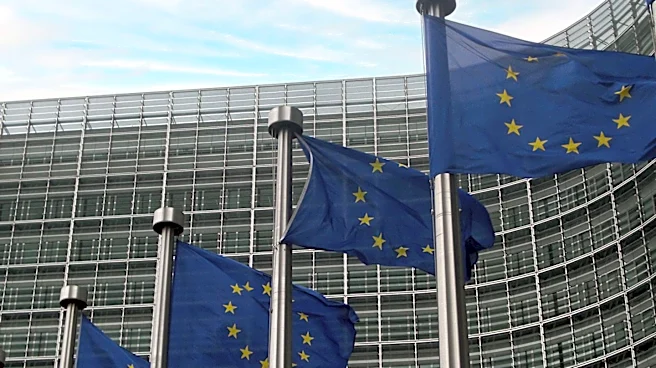
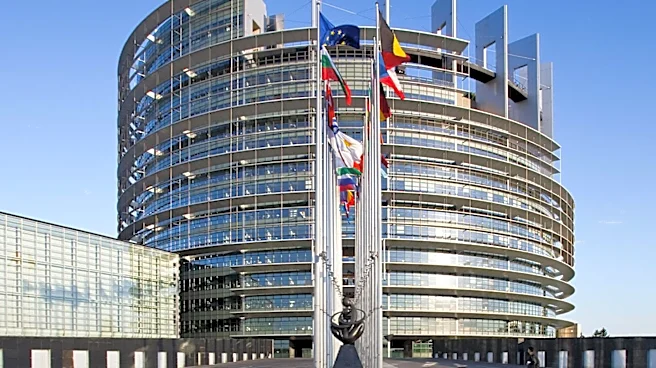
The European Union's Council has formally adopted temporary trade liberalization measures for Armenian products. These measures are designed to support Armenia's economy, particularly in response to trade restrictions imposed by Russia. The new regulations
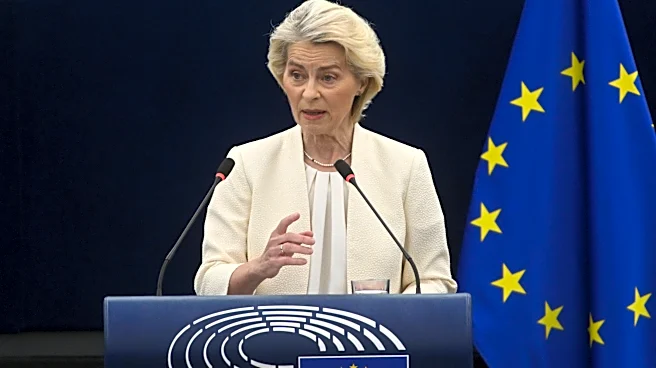
will liberalize approximately 80% of Armenian exports to the EU by suspending import duties on a wide range of products, including certain agricultural goods. This decision follows a positive vote in the European Parliament. The regulation is set to come into force the day after its publication in the EU's Official Journal and will remain applicable for a period of two years.
Why It's Important?
This action by the EU is significant as it provides crucial economic relief and support to Armenia, a country facing economic challenges due to regional geopolitical tensions. By reducing import tariffs, the EU aims to boost Armenia's export capabilities and integrate its economy more closely with the European market. For the U.S., while not directly involved in this specific trade agreement, it highlights the broader geopolitical strategy of Western alliances to support countries in regions affected by Russian influence. Such measures can contribute to regional stability and economic diversification, aligning with broader U.S. foreign policy goals of promoting democratic and market-oriented economies. It also demonstrates how trade policy can be utilized as a tool for diplomatic support and economic development in complex international environments. The liberalization of trade for Armenian goods could also open new avenues for U.S. businesses seeking to invest or operate in a more stable and economically integrated Armenian market.
What's Next?
The regulation will take effect shortly after its publication in the EU's Official Journal, initiating a two-year period of reduced import tariffs for Armenian products. During this time, Armenia is expected to increase its exports to the EU, potentially leading to economic growth and diversification away from traditional trade partners. The success of these measures will likely be monitored by both the EU and Armenia, with potential for further trade agreements or extensions depending on the economic outcomes and geopolitical landscape. This period will also allow Armenian businesses to adapt to EU market standards and expand their production capacities. The long-term goal is to foster a more resilient and integrated Armenian economy within the European framework.
Beyond the Headlines
The EU's decision to reduce import tariffs for Armenia carries significant geopolitical undertones. It represents a strategic move to strengthen ties with Armenia and offer an economic alternative amidst ongoing regional pressures, particularly from Russia. This kind of economic support can be crucial in influencing a country's foreign policy alignment and its trajectory towards democratic and economic reforms. The measure also underscores the concept of 'trade as aid,' where economic incentives are used to achieve broader political and strategic objectives. The long-term implications could include a gradual shift in Armenia's economic and political orientation, potentially leading to deeper integration with Western institutions and a reduced reliance on its traditional partners. This could set a precedent for how major economic blocs respond to geopolitical challenges through targeted trade policies.