







What's Happening?
A recent Pew Research Center survey indicates a significant shift in global opinion, with China now being viewed more favorably than the U.S. in 25 out of 36 countries surveyed. This marks the first time in two decades that China has surpassed the U.S. in global favorability.
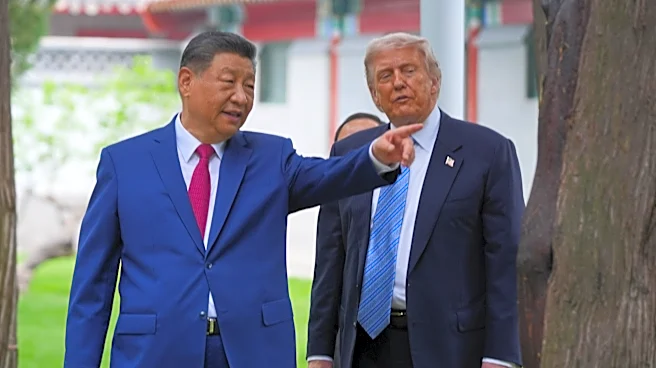
The survey, conducted from February to May, highlights that views of Chinese leader Xi Jinping are also more favorable than those of U.S. President Trump in 22 countries, including major European nations like France, Germany, and the U.K. The shift is attributed to various factors, including the fading memory of the COVID-19 pandemic and recent U.S. foreign policy actions, such as the handling of the Israeli-Hamas conflict and military operations in Venezuela.
Why It's Important?
This shift in global perception could have significant implications for international relations and U.S. foreign policy. The U.S. has traditionally been seen as a leader in global affairs, but this change suggests a potential decline in its influence. Countries that view China more favorably may be more inclined to align with Chinese policies and initiatives, potentially affecting global trade, security alliances, and diplomatic negotiations. The survey results also reflect broader dissatisfaction with U.S. leadership under President Trump, which could impact the U.S.'s ability to form coalitions and exert soft power on the global stage.
What's Next?
The U.S. may need to reassess its foreign policy strategies to address the growing favorability of China. This could involve diplomatic efforts to rebuild alliances and improve international perceptions of U.S. leadership. Additionally, the upcoming U.S. elections could play a crucial role in shaping future foreign policy directions. As global dynamics continue to evolve, both the U.S. and China will likely engage in strategic maneuvers to enhance their international standing and influence.