








What's Happening?
The Salish Sea, bordering the U.S. and Canada, was a hotbed for piracy and smuggling during the late 19th and early 20th centuries, with salmon being a primary target. The region's complex waterways and proximity to the international border facilitated
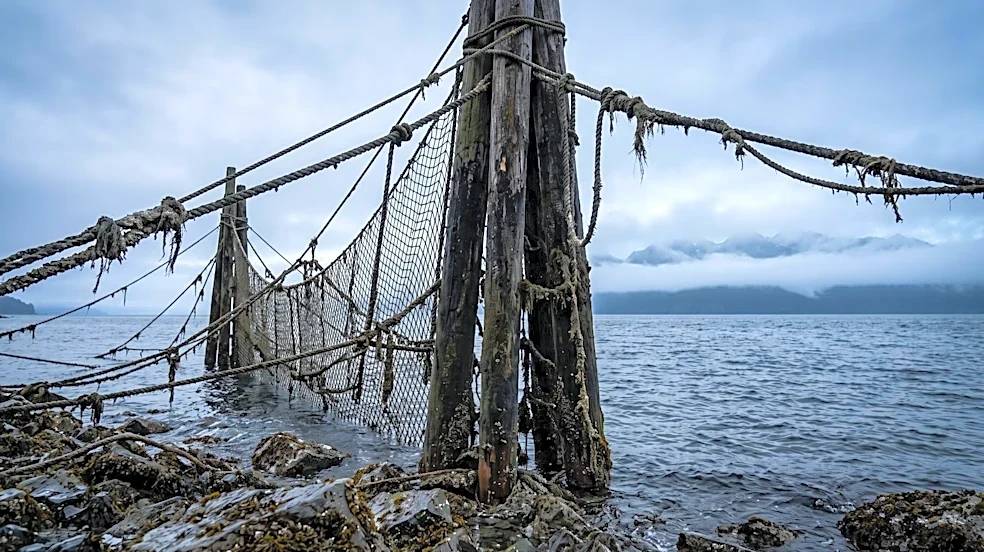
illicit activities. While opium smuggling and human trafficking were prevalent, the most lucrative form of piracy involved salmon. The burgeoning salmon canning industry led to the widespread use of large trap nets, which funneled millions of fish. Pirates would raid these nets, often under the cover of darkness, to steal salmon. These stolen fish were easily sold to eager buyers, as their freshness often surpassed that of legally caught salmon. Some notorious figures, like Bert 'Spider' Jones, openly engaged in fish piracy, earning monikers like 'Fish Pirate Jones.' As the practice escalated, some pirate operations became armed gangs, leading to significant hauls, with one raid in 1909 reportedly netting $10,000 worth of sockeye.
Why It's Important?
This historical account of salmon piracy in the Salish Sea highlights the significant economic and regulatory challenges faced by the U.S. fishing industry during a period of rapid industrialization. The lack of effective regulation and enforcement created an environment ripe for exploitation, leading to substantial financial losses for legitimate businesses and potentially contributing to overfishing. The ease with which stolen salmon could be integrated into the market underscores weaknesses in supply chain oversight and consumer awareness. Furthermore, the emergence of armed pirate gangs indicates a breakdown in law and order in certain maritime areas, posing risks to legitimate fishers and contributing to a climate of lawlessness. This historical context provides valuable lessons on the importance of robust regulatory frameworks, effective enforcement, and transparent supply chains in managing natural resources and preventing illicit trade.
What's Next?
While the era of widespread salmon piracy in the Salish Sea has long passed due to changes in regulations, the historical context serves as a cautionary tale for modern resource management. The lessons learned from this period continue to inform contemporary efforts to combat illegal fishing and protect marine ecosystems. Current and future policies regarding fisheries management, border security, and trade regulations in the Salish Sea and other coastal regions can draw upon this history to develop more resilient and enforceable systems. Ongoing monitoring of fishing practices, international cooperation on maritime law enforcement, and consumer education about sustainable sourcing are all areas that can be influenced by understanding past challenges like salmon piracy. The narrative also contributes to the broader understanding of the region's economic and social history.
Beyond the Headlines
The phenomenon of salmon piracy in the Salish Sea reveals deeper implications about human interaction with natural resources and the evolution of legal and ethical boundaries. The 'strip-mining' of salmon through industrial-scale trapping and subsequent piracy illustrates a period where resource exploitation often outpaced conservation efforts and regulatory control. The casual acceptance of stolen fish by buyers, who 'rarely questioned the source,' points to a societal blind spot regarding the origins of goods when profit is involved. This historical context offers a lens through which to examine contemporary issues of illegal, unreported, and unregulated (IUU) fishing globally, and the challenges of enforcing environmental laws across international borders. It also highlights the complex interplay between economic opportunity, technological advancement in resource extraction, and the development of legal frameworks to manage and protect shared natural assets.