
What's Happening?
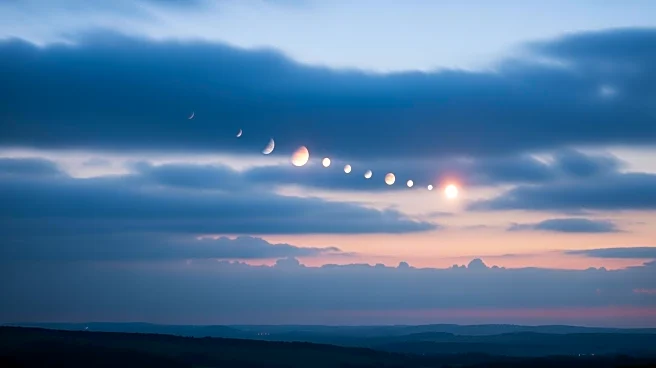
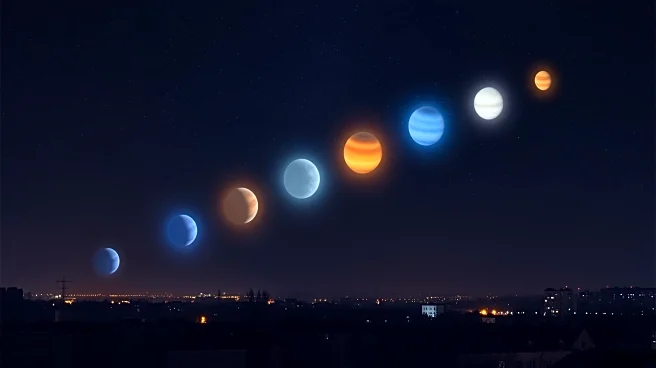
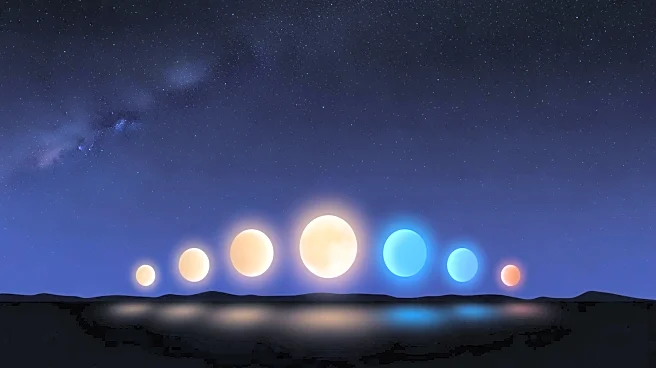
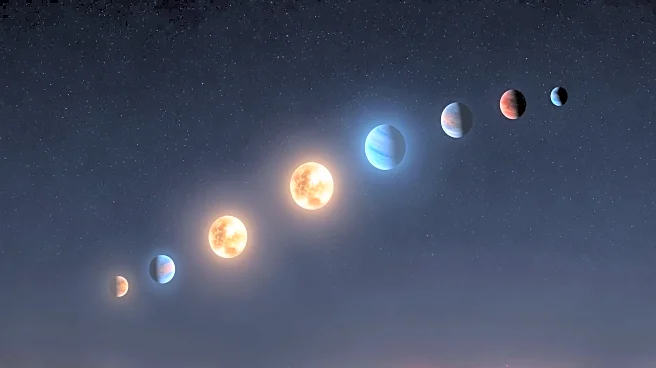
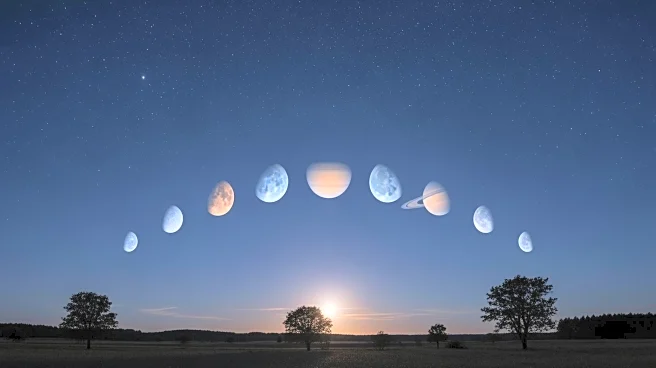
Stargazers are in for a treat as a rare planetary alignment, known as a planetary parade, is set to occur on February 28, 2026. This event will feature six planets—Mercury, Venus, Jupiter, Saturn, Uranus, and Neptune—lining up in the night sky. Such alignments
happen when the planets' orbits position them on the same side of the sun, creating a visual line from Earth's perspective. While Mercury, Venus, Jupiter, and Saturn will be visible to the naked eye, Uranus and Neptune will require telescopes for viewing. The best time to observe this alignment is shortly after sunset, with the planets stretching across the sky rather than clustering together.
Why It's Important?
This planetary alignment offers a unique opportunity for both amateur and professional astronomers to observe multiple planets simultaneously. Such events are not only visually spectacular but also provide educational opportunities to learn about planetary movements and the solar system's dynamics. For the general public, it serves as a reminder of the vastness and beauty of the universe, potentially sparking interest in astronomy and science. The alignment's visibility without the need for specialized equipment makes it accessible to a wide audience, encouraging outdoor activities and community gatherings centered around stargazing.
What's Next?
Following this event, astronomers and enthusiasts will likely continue to monitor planetary movements for future alignments. Educational institutions and astronomy clubs may organize events to capitalize on public interest, offering talks and guided observations. Additionally, this alignment could inspire further research into planetary science and the mechanics of celestial bodies. As technology advances, future alignments may be observed with even greater detail, enhancing our understanding of the solar system.