



What's Happening?
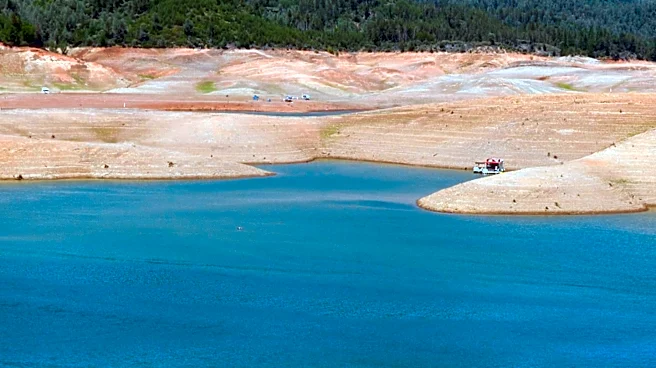
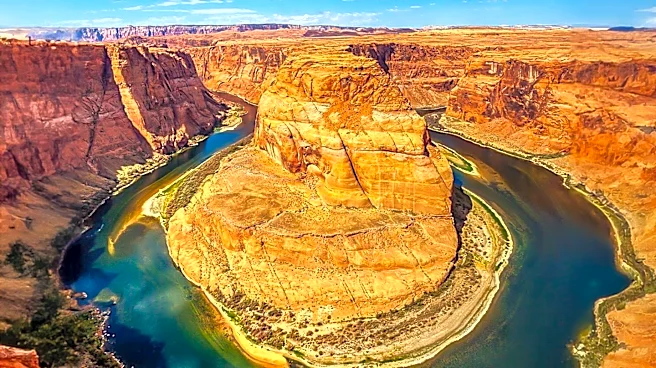
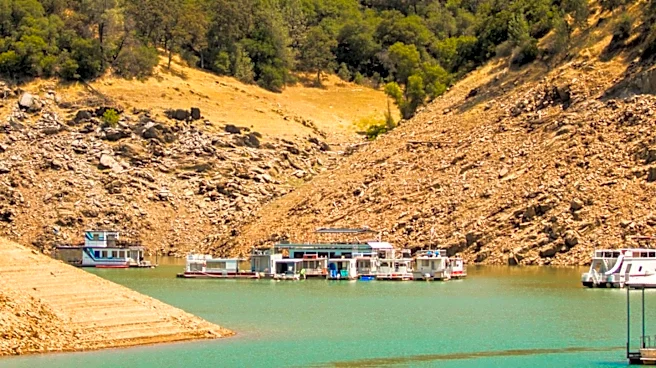
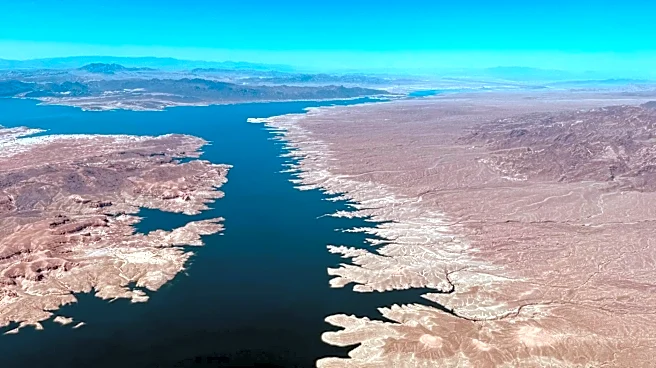
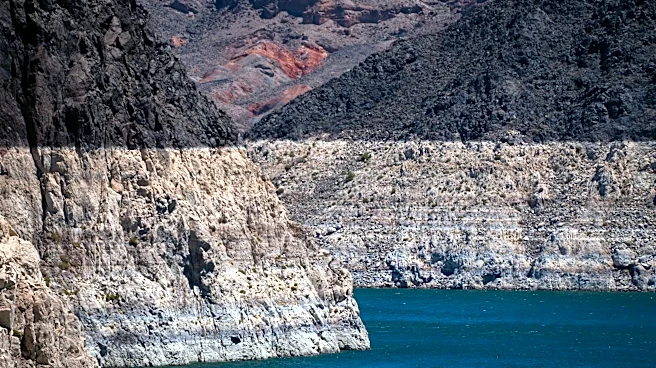
Lake Mead, the largest reservoir in the United States, has reached its lowest level since it was filled nearly 90 years ago. The reservoir, located between Arizona and Nevada, dropped to about 1,040.4 feet above sea level, surpassing the previous record
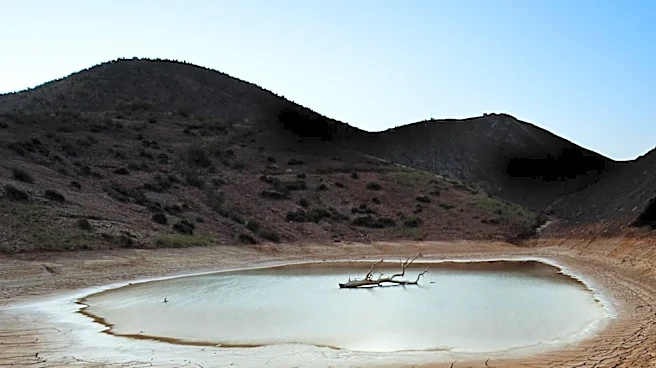
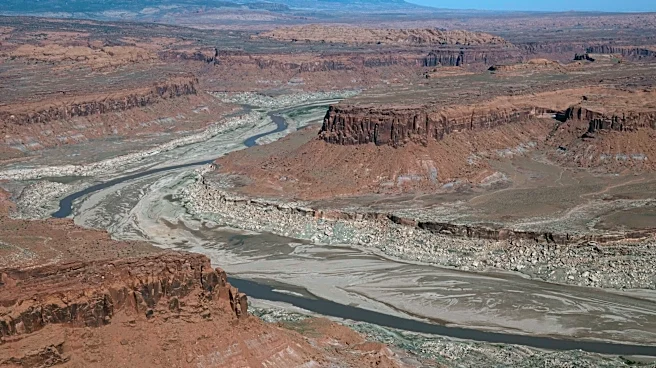
low set in July 2022. This decline is part of a broader crisis affecting the Colorado River system, which supplies water to seven U.S. states and Mexico. The system is under significant stress due to prolonged drought, rising temperatures, and demand that exceeds the river's reliable supply. The Bureau of Reclamation's recent study indicates that inflow into Lake Powell, which feeds Lake Mead, was only 12% of the historical average in June. Projections suggest that Lake Mead will continue to fall, potentially reaching 1,037.3 feet by the end of the year.
Why It's Important?
The declining water levels in Lake Mead and the broader Colorado River system have significant implications for millions of people and industries across the western United States. The reservoir is a critical water source for agricultural, municipal, and industrial uses, supporting approximately 35 to 40 million people. The ongoing water shortage threatens agricultural productivity, hydropower generation, and the overall economic stability of the region. As water levels drop, the risk of reaching 'dead pool' status, where water can no longer be released downstream, becomes more imminent. This situation underscores the urgent need for sustainable water management practices and collaborative efforts among the states and stakeholders reliant on the Colorado River.
What's Next?
In response to the crisis, the Department of the Interior and the Bureau of Reclamation have released a 10-year adaptive management framework for Lake Powell and Lake Mead, effective through 2036. This framework includes measures such as adjusting annual water releases and implementing water conservation strategies. Additionally, various proposals are being considered to alleviate stress on the system, including expanded water recycling, desalination, and changes to agricultural practices. Stakeholders are expected to engage in ongoing negotiations to reach consensus on water management strategies that balance the needs of all users.