
What's Happening?
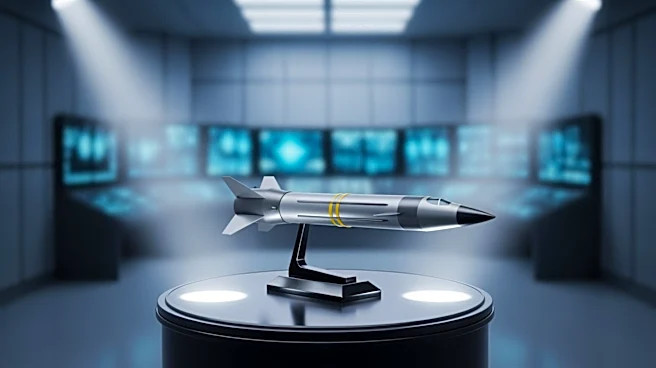
Turkey has revealed a model of a new intercontinental ballistic missile (ICBM) named Yildirimhan, marking a significant development in its defense capabilities. The missile, showcased at the SAHA 2026
International Defense and Aerospace Exhibition in Istanbul, is designed to have a range of 6,000 kilometers, placing it within the ICBM category. This development is part of Turkey's broader strategy to enhance its missile capabilities, which have been expanding over the past 25 years. The Yildirimhan is a conventionally armed missile, powered by four rocket engines, and is intended to be road-mobile. The Turkish Ministry of Defense has indicated that the missile will carry a large warhead and will be liquid-fueled, which could impact its response time and vulnerability to preemptive strikes.
Why It's Important?
The unveiling of the Yildirimhan ICBM underscores Turkey's strategic ambitions and its desire to bolster its conventional deterrent capabilities. This move could have significant geopolitical implications, particularly in the context of Turkey's regional security concerns and its position within NATO. The development of such a missile could alter the balance of power in the region, potentially affecting Turkey's relations with neighboring countries and other global powers. Additionally, the introduction of a conventionally armed ICBM could influence global arms control dynamics, especially given Turkey's membership in the Missile Technology Control Regime, which restricts the export of certain missile technologies.
What's Next?
While the timeline for the Yildirimhan's operational deployment remains unclear, its development could prompt reactions from regional and global stakeholders. Countries within the missile's range may reassess their security strategies, and NATO allies might seek to engage Turkey in discussions about its missile program. Furthermore, Turkey's continued investment in missile technology could lead to further advancements in its defense industry, potentially increasing its influence in the global arms market. The geopolitical landscape in the region may shift as countries respond to Turkey's enhanced military capabilities.