





What's Happening?
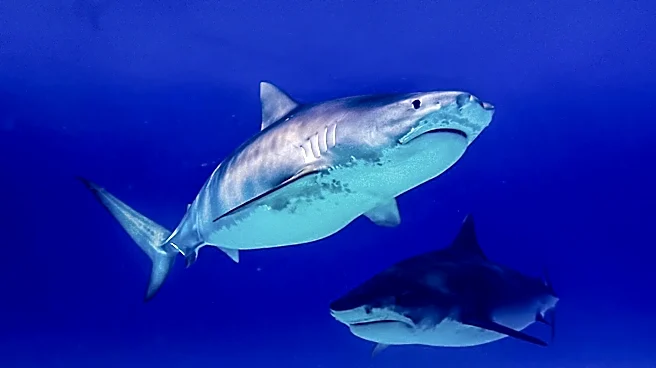
Norfolk Island, a remote South Pacific outpost, has become home to unusually large tiger sharks, with a median length of 4 meters and some females reaching 4.5 meters. This phenomenon is attributed to the island's isolated location, rich marine ecosystem,
and certain human practices. While the island's offal chute at Headstone Bay, used for disposing of cattle carcasses, has been cited as a factor, studies by Professor Charlie Huveneers of Flinders University indicate that seabirds constitute 70% of the sharks' diet, with offal accounting for only 5%. This suggests that the sharks' extraordinary size is primarily due to the island's natural bounty rather than solely human-induced food sources. Satellite tracking has also revealed that these sharks are nomadic, traveling thousands of kilometers across the ocean, with one shark logging 17,000 kilometers in 468 days.
Why It's Important?
The situation on Norfolk Island highlights the complex interplay between human activities and natural ecosystems, offering a unique case study in marine conservation. The presence of super-sized tiger sharks, while a natural marvel, raises questions about sustainable waste management and its potential impact on marine life. The proposed expansion of the marine sanctuary around Norfolk Island could further protect these predators, but it also necessitates a careful examination of how human practices, such as waste disposal, can be managed without disrupting the delicate ecological balance. The sharks' nomadic behavior underscores the interconnectedness of marine environments across vast distances, emphasizing that conservation efforts in one region can have far-reaching implications for broader oceanic health and biodiversity. This scenario provides valuable insights into the adaptability and resilience of apex predators in a changing world.
What's Next?
The proposed expansion of the marine sanctuary around Norfolk Island is a key next step, aiming to enhance the protection of these large tiger sharks and their habitat. This expansion will likely prompt further discussions and policy development regarding sustainable waste disposal methods on the island to minimize any unintended ecological consequences. Researchers will continue to monitor the sharks' migratory patterns and dietary habits to gain a more comprehensive understanding of their behavior and the factors contributing to their size. The ongoing interaction between the local community, including fishers and spearfishing guides, and these sharks will also be observed, as their perceptions and experiences contribute to the broader narrative of human-wildlife coexistence. Future conservation strategies will need to balance the protection of these unique predators with the needs and practices of the island's human inhabitants.
Beyond the Headlines
The story of Norfolk Island's super-sized tiger sharks delves into deeper implications concerning the public perception of sharks and the ethical dimensions of human interaction with wildlife. Despite their imposing size, local fishers and spearfishing guides describe these sharks as 'placid and predictable,' challenging the common portrayal of sharks as aggressive, mindless predators. This discrepancy highlights how fear often stems from misunderstanding and underscores the importance of accurate scientific information in shaping public attitudes towards marine life. The island serves as a microcosm for broader conservation challenges, illustrating how human ingenuity and natural resilience can collide, creating both opportunities and dilemmas. It prompts reflection on humanity's role within larger ecosystems and the potential for coexistence, suggesting that learning to live in harmony with such powerful creatures can offer valuable lessons for our relationship with the natural world as a whole.