



What's Happening?
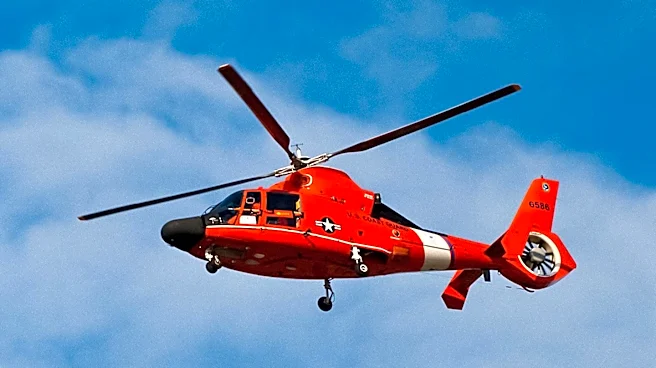
The U.S. Coast Guard East District, which oversees the mid-Atlantic region, has been awarded the International Ocean Safety Award for a supreme maritime rescue. This recognition is for their successful rescue of five crew members from the 54-foot catamaran
'Magic Bus' on November 6, 2025. The incident occurred 260 nautical miles off Cape Hatteras, North Carolina, during a severe force 8-9 gale. The 'Magic Bus' was on an 1,100-mile migration voyage from Long Island Sound, Connecticut, to the Bahamas when it encountered critical issues, including a flooded engine compartment and a ripped-off saloon hatch, leading to water ingress from both above and below the waterline. The crew, despite being experienced, faced communication challenges, as their VHF radio lacked sufficient range and attempts to contact the Coast Guard via mobile phone and website were unsuccessful due to an automated system and a government shutdown. The owner of the 'Magic Bus' ultimately alerted the Coast Guard via 911.
Why It's Important?
This supreme maritime rescue highlights the critical role of the U.S. Coast Guard in ensuring safety at sea and underscores the inherent dangers of ocean voyages, even for experienced crews. The incident also brings to light significant issues regarding emergency communication protocols and the reliability of safety equipment. The crew's inability to directly contact the Coast Guard through standard maritime channels or even their website during a dire emergency points to potential vulnerabilities in current systems. The diversion of the U.S. aircraft carrier George H. W. Bush to serve as a refueling point for the rescue helicopter demonstrates the extensive resources and inter-agency coordination required for such operations. This event serves as a crucial case study for maritime safety organizations, emphasizing the need for robust contingency plans, well-maintained and understood safety equipment, and clear, accessible emergency contact procedures for all mariners.
What's Next?
The U.S. Coast Guard, in light of this rescue and the lessons learned, will likely continue to emphasize and promote best practices for maritime safety. Key recommendations include sharing voyage plans and timings with shore contacts, ensuring all safety equipment is in service and understood by the crew, having an emergency call action plan readily available, and carrying appropriate long-range communication devices like Single Side Band (SSB) radios or satellite phones for offshore voyages. There may also be a push for improved accessibility and responsiveness of emergency contact systems, potentially addressing the issues encountered by the 'Magic Bus' crew with automated phone systems and unmanned websites during critical situations. The incident will likely be incorporated into future training and safety briefings for both recreational and professional mariners to prevent similar communication breakdowns.
Beyond the Headlines
The 'Magic Bus' rescue transcends a simple act of heroism, revealing deeper systemic challenges within maritime safety and emergency response. The communication failures experienced by the crew, particularly the ineffectiveness of standard emergency calls and the unresponsiveness of official channels during a government shutdown, expose vulnerabilities that could have catastrophic consequences in other emergencies. This incident could prompt a re-evaluation of how government agencies maintain essential services during shutdowns and how maritime emergency communication infrastructure can be made more resilient. Furthermore, the reliance on an owner's 911 call to initiate the rescue highlights the potential for human error and the need for redundant, foolproof emergency signaling systems. The award serves not only as recognition for the Coast Guard but also as a stark reminder for all maritime stakeholders to continuously assess and improve safety protocols and technological readiness.