
What's Happening?
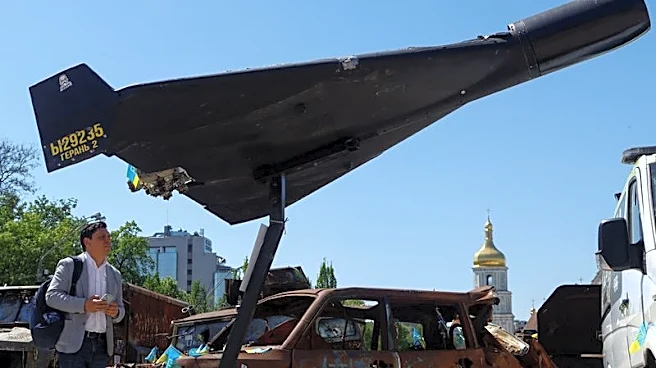
German officials have expressed cautious reactions to Russian President Vladimir Putin's suggestion that former German Chancellor Gerhard Schröder could mediate peace talks in the Ukraine conflict. Schröder,
who has maintained a close relationship with Putin and previously held roles in Russian energy projects, was nominated by Putin as a potential negotiator. The proposal has sparked debate within Germany's Social Democratic Party (SPD), with some members advocating for careful consideration of the idea, while others emphasize the need for a mediator acceptable to Ukraine. The ongoing US-mediated ceasefire between Russia and Ukraine is under strain, with both sides accusing each other of violations.
Why It's Important?
The suggestion of Schröder as a mediator underscores the complexities of international diplomacy in resolving the Ukraine conflict. Schröder's close ties to Putin and his past involvement in Russian energy projects raise questions about his impartiality. The mixed reactions from German officials highlight the challenges in finding a mediator who is acceptable to all parties involved. The strained ceasefire further complicates the situation, as continued hostilities could undermine diplomatic efforts. The outcome of these discussions could influence the future of European security and the role of external mediators in conflict resolution.
What's Next?
The next steps involve assessing the viability of Schröder's role as a mediator and the continuation of diplomatic efforts to uphold the ceasefire. The international community, particularly European nations, will need to engage in discussions to determine the most effective approach to mediation. The US is also expected to play a significant role, with envoys planning to visit Moscow for further talks. The success of these efforts will depend on the willingness of Russia and Ukraine to engage in meaningful negotiations and the ability of mediators to facilitate a comprehensive peace agreement.