






What's Happening?
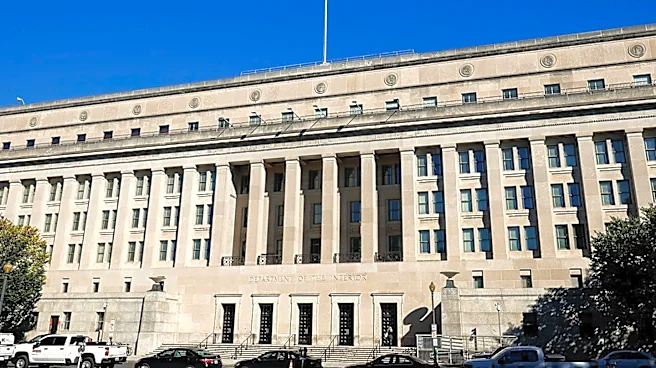
A 1926 booklet titled 'The Story of the Declaration of Independence,' published by the U.S. Government Printing Office for the Bureau of Education (then part of the Department of the Interior), has been identified as a significant historical artifact.
This 20-page pamphlet, written by James C. Boykin under the direction of U.S. Commissioner of Education John J. Tigert, was commissioned by a special Act of Congress on May 28, 1926 (H.R. 11202). Its purpose was to commemorate the 150th anniversary of the signing of the Declaration of Independence. The booklet provided historical context, the full text of the Declaration, and biographical sketches of the signers, distributed to schools, colleges, and universities nationwide, with additional copies allotted to Senators and Representatives for constituent distribution.
Why It's Important?
This historical booklet underscores the federal government's past efforts in civic education and national commemoration. Its creation by an Act of Congress highlights a deliberate strategy to standardize and disseminate historical knowledge to the public, particularly to students, during a significant national anniversary. The distribution method, involving both educational institutions and elected officials, demonstrates a comprehensive approach to fostering national identity and understanding of foundational American principles. Furthermore, the booklet serves as a historical marker, illustrating how federal agencies were structured before the establishment of a standalone Department of Education in 1979, with the Bureau of Education operating under the Department of the Interior.
What's Next?
As the United States approaches the 250th anniversary of the Declaration of Independence in 2026, this 1926 pamphlet offers a valuable historical precedent for how such commemorations have been approached by the federal government. It provides insight into past civic education strategies and could inform future initiatives for public engagement with American history. Researchers and historians may continue to study such artifacts to understand the evolution of national identity and educational policies. The digitized copies of the booklet and the Act of Congress that authorized it remain accessible resources for public and academic study, offering a direct link to a century-old federal initiative.
Beyond the Headlines
The booklet's existence reveals a deeper commitment to public civic education during a period of significant national reflection. It suggests a proactive role for the government in shaping historical narratives and promoting patriotic understanding. The use of a decorative border composed of tiny Liberty Bells, the official symbol of the 1926 Sesquicentennial, illustrates the integration of national symbols into educational materials. This artifact also implicitly raises questions about the current state of civic education and whether similar comprehensive federal initiatives are undertaken today to educate the public on foundational documents and historical events. It serves as a 'time capsule' showing how the nation celebrated its past and educated its citizens a century ago.