




What's Happening?
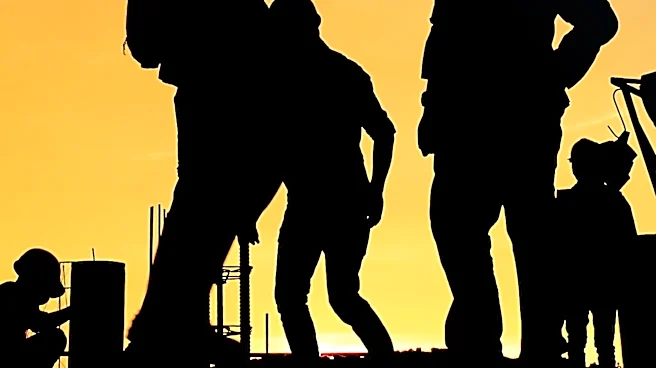
Labor Day in the United States is officially observed on the first Monday in September, which in 2026 falls on September 7. This federal holiday is dedicated to recognizing the significant contributions and achievements of American workers. The holiday's
origins trace back to the late 19th century, with the first unofficial celebration occurring in 1882 when approximately 10,000 workers marched through New York City to advocate for improved working conditions. By 1894, the U.S. Congress officially recognized Labor Day as a federal holiday. While many Americans now view it as a day of rest and the unofficial end of summer, its historical roots are deeply embedded in the labor movement's fight for better wages, safer workplaces, and shorter hours. The holiday serves as a reminder of the struggles and sacrifices made by workers to achieve the workplace standards enjoyed today.
Why It's Important?
Labor Day holds significant importance as it commemorates the historical efforts and ongoing contributions of the American workforce. It underscores the evolution of labor rights and conditions, highlighting the impact of collective action on societal well-being. The holiday provides a moment for reflection on the advancements in worker protections, such as the establishment of the eight-hour workday, which were hard-won battles in the late 19th and early 20th centuries. Economically, Labor Day often marks a period of increased consumer activity, particularly for end-of-summer sales and back-to-school shopping, influencing various retail sectors. Socially, it reinforces the value of labor and the dignity of work, acknowledging the foundation upon which the nation's prosperity is built. The holiday also serves as a reminder of the continuous need to address contemporary labor issues and ensure fair treatment for all workers.
What's Next?
As Labor Day 2026 approaches, the focus will likely be on both its traditional observance and its economic implications. Many businesses will offer promotions, particularly for items related to travel, home, and work, as consumers prepare for the autumn months. Government offices, banks, and the stock market will be closed in observance of the federal holiday. For workers, it will be a day off for many, allowing for rest, family time, and community events. Discussions around the holiday may also touch upon current labor market trends, worker rights, and the future of work in the U.S. The holiday's historical context will continue to be a point of reflection, reminding the public of the ongoing relevance of labor movements and the importance of advocating for equitable working conditions.
Beyond the Headlines
Beyond its immediate observance, Labor Day carries deeper implications regarding the ongoing dialogue about labor's role in society and the economy. The holiday's origins highlight the persistent tension between labor and capital, and the continuous struggle for fair treatment and equitable distribution of wealth. The historical debate over who truly founded Labor Day, with figures like Matthew Maguire and Peter J. McGuire, underscores how political ideologies and historical narratives can shape public memory. Maguire's socialist leanings, for instance, may have led to his contributions being downplayed in favor of a less 'radical' narrative. This historical context reveals how the sanitization of labor history can obscure the radical roots of many worker protections. The holiday thus serves as a subtle reminder of the power dynamics at play in defining national narratives and the importance of critically examining the origins of our social institutions.