








What's Happening?
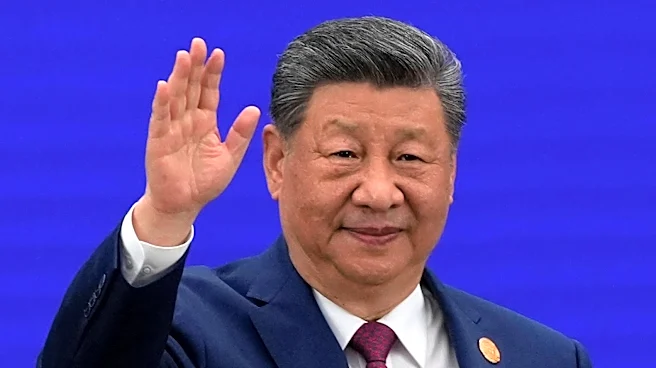
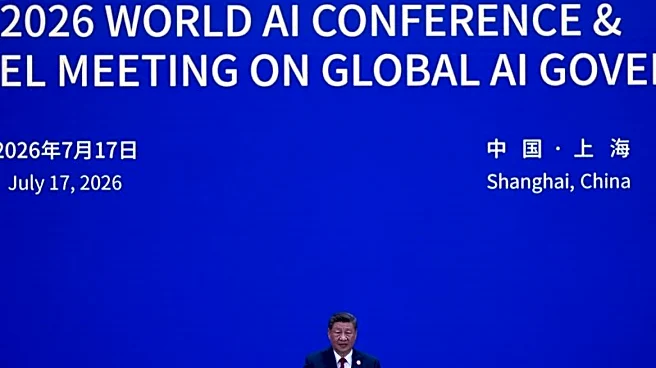
Chinese President Xi Jinping emphasized the need for global cooperation in the development and governance of artificial intelligence (AI) during the World AI Conference in Shanghai. He announced China's plan to offer 5,000 AI training opportunities to developing
countries over the next five years and to expand AI cooperation with international blocs such as the Association of Southeast Asian Nations, the League of Arab States, and the African Union. Xi criticized the 'overstretching' of national security concerns in AI governance and called for a more inclusive approach. He also warned against creating 'new historical injustices' in the AI era, advocating for greater support for the Global South.
Why It's Important?
Xi's statements highlight China's strategic positioning in the global AI landscape, aiming to counterbalance U.S.-led restrictions on technology exports. By offering training and cooperation, China seeks to strengthen its influence in developing regions and promote its AI technologies as viable alternatives to Western models. This move could shift the balance of technological power and foster new alliances, potentially impacting global economic and political dynamics. The emphasis on inclusivity and security in AI development reflects broader concerns about the ethical and geopolitical implications of AI technologies.
What's Next?
China's commitment to AI cooperation and training initiatives is likely to enhance its soft power and technological influence, particularly in the Global South. The establishment of the World Artificial Intelligence Cooperation Organization, as announced at the conference, could serve as a platform for China to lead global AI governance discussions. This development may prompt responses from other major economies, including the U.S., which could seek to reinforce their own AI strategies and alliances. The ongoing tech rivalry between China and the U.S. is expected to intensify as both nations vie for leadership in AI innovation and governance.
Beyond the Headlines
The conference underscores the ethical and security challenges posed by AI technologies, as well as the potential for AI to exacerbate existing global inequalities. China's approach to AI governance, which emphasizes multilateralism and inclusivity, contrasts with the more protectionist policies of some Western countries. This divergence could influence international norms and standards for AI development, with implications for global trade, security, and human rights. The focus on AI as a tool for development also raises questions about the role of technology in addressing global challenges such as climate change and economic inequality.