





What's Happening?
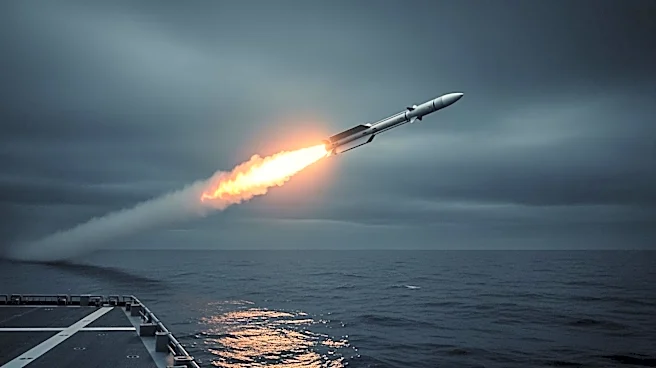
The U.S. military has taken decisive action by firing a Hellfire missile into the engine room of the Gambia-flagged vessel, Lian Star, which was attempting to breach the U.S. blockade of Iran. According to U.S. Central Command, the incident occurred as the ship
was transiting international waters toward an Iranian port on the Gulf of Oman. Prior to the missile strike, U.S. forces issued over 20 warnings to the vessel, indicating its violation of the blockade. The military action is part of ongoing efforts to enforce the blockade, which began on April 13. Since then, the U.S. military has redirected at least 115 ships. Secretary of Defense Pete Hegseth has stated that the U.S. is prepared to resume strikes on Iran if diplomatic efforts to end the conflict fail. The blockade and subsequent military actions have contributed to rising global energy prices, as Iran has largely closed the Strait of Hormuz.
Why It's Important?
This military action underscores the heightened tensions between the United States and Iran, with significant implications for global energy markets. The closure of the Strait of Hormuz, a critical chokepoint for global oil shipments, has already led to increased energy prices, affecting economies worldwide. The U.S. military's readiness to continue strikes if negotiations falter highlights the potential for further escalation, which could disrupt international trade and energy supplies. The situation also reflects broader geopolitical dynamics, as the U.S. seeks to assert its influence in the Indo-Pacific region and counter Iranian actions. Stakeholders in the energy sector, international trade, and global security are closely monitoring these developments, as any escalation could have far-reaching consequences.
What's Next?
The next steps in this conflict will likely involve continued diplomatic efforts to reach a resolution between the U.S. and Iran. However, the U.S. military's preparedness to resume strikes suggests that military actions could continue if negotiations do not yield results. The international community, including major energy-importing nations, may increase pressure on both parties to de-escalate tensions and ensure the free flow of oil through the Strait of Hormuz. Additionally, the U.S. may seek to strengthen alliances with regional partners to bolster its strategic position. The outcome of these efforts will be critical in determining the future stability of the region and the global energy market.