






What's Happening?
The H5N1 bird flu virus has now reached every continent, including Australia, raising concerns for the continent's unique species. The virus was confirmed in three petrels and a skua found dead or sick along Australia's southern shoreline. This development
follows the virus's devastating impact globally, where it has killed millions of birds and mammals since 2020. The risk to humans remains low, with about 500 deaths reported worldwide since 1997, primarily among those working in commercial poultry. However, the virus's arrival in Australia poses a significant threat to its endemic wildlife, with many species at risk of extinction if the virus spreads.
Why It's Important?
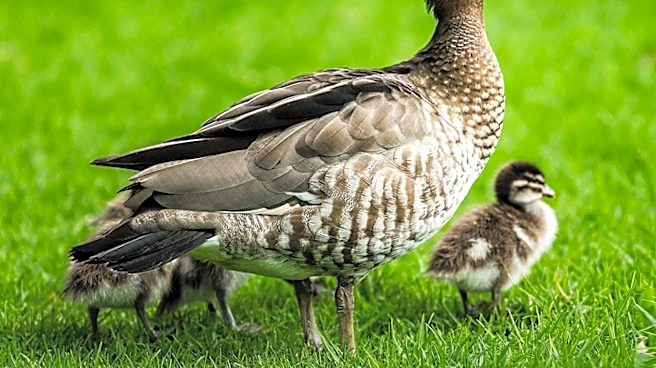
Australia is home to a high number of endemic species, meaning they exist nowhere else on the planet. The spread of H5N1 could have catastrophic effects on these species, potentially leading to extinctions. The virus's presence in Australia could undo decades of conservation efforts aimed at protecting threatened species. The potential for rapid spread within the continent is high, given the migratory patterns of seabirds and the dense populations of waterbirds in wetlands. The situation is particularly concerning as Australia has a high level of endemism, with about half of its bird species and 87% of its land-based mammals being unique to the region.
What's Next?
Australian authorities, conservationists, and scientists are closely monitoring the situation to prevent the virus from spreading into native wildlife populations. A national response plan was established in 2024, and efforts are underway to mitigate the risk. Experts suggest creating captive populations of threatened species as a precautionary measure. The government and conservation groups are prioritizing species and locations at high risk. The spread of the virus is expected to be rapid, with potential long-term impacts on biodiversity and conservation efforts in Australia.
Beyond the Headlines
The arrival of H5N1 in Australia highlights the interconnectedness of global ecosystems and the challenges of managing wildlife diseases in a globalized world. The situation underscores the need for robust international cooperation and preparedness to address emerging infectious diseases. The cultural significance of Australia's unique species to its First Nations people adds an additional layer of complexity to the conservation efforts. The potential loss of these species would not only be a biological tragedy but also a cultural one.